Camp packing + prep.
Day camp and overnight-camp packing without over-packing, the eight things parents always bring and shouldn't, and the five pre-camp conversations that stop most day-one meltdowns before they start.
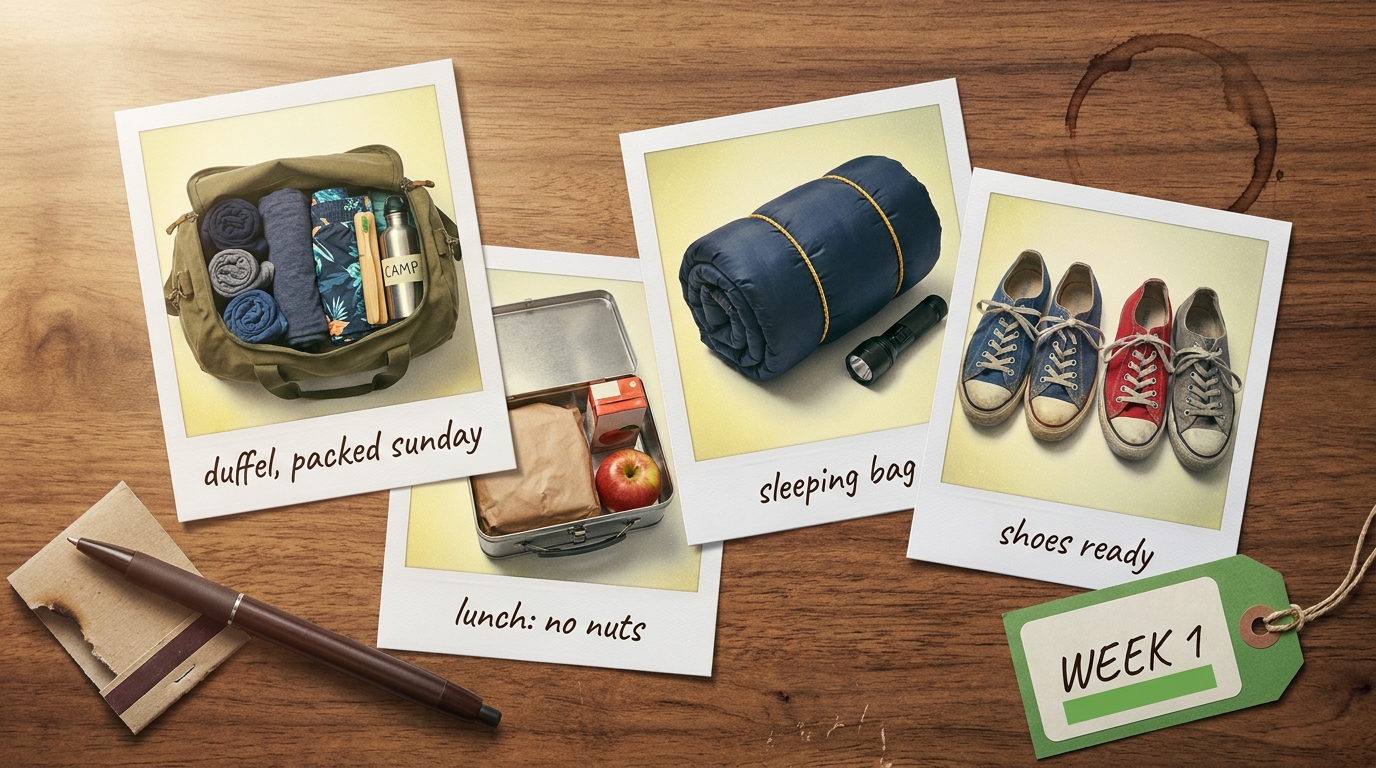
- Day camp: one backpack, one water bottle, one lunch. Don't over-pack — you will regret it.
- Overnight camp: label every single item. Yes, including socks. The end-of-session lost-and-found pile is its own genre of chaos.
- Break in new shoes two weeks before drop-off. Nothing ruins day one like blisters.
- Five pre-camp conversations, spread over two or three weeks, head off most day-one anxiety.
- Arrive 10 to 15 minutes early on day one. Rushing sets the wrong tone and lands your kid next to a stressed parent.
- Keep goodbyes short. Five minutes is kinder to an anxious kid than twenty.
The daily essentials, ages 4 to 17.
Every day
- Labeled backpack
- Labeled water bottle (refillable, 20-32 oz)
- Packed lunch + snack (check camp's snack-provision policy)
- Sunscreen (reef-safe; apply at home + send small labeled bottle)
- Hat or sun visor
- Insect-repellent wipes (single-serve, easier for kid self-apply)
- Change of clothes (backup, in sealed bag)
- Emergency contact card in backpack
Swim days
- Swimsuit (worn under clothes or packed)
- Towel
- Wet-bag for wet swimsuit
- Swim goggles (if kid uses them)
- Plastic flip-flops or water shoes
Hot days
- Lightweight moisture-wicking shirt
- Electrolyte packet (for sustained heat — Liquid I.V. Kids, Pedialyte, or similar)
Specialty day camps
- STEM: closed-toe shoes (soldering, lab work), maybe their own laptop if the camp allows.
- Sports: sport-specific gear (cleats, helmet, stick/racket/glove), extra athletic socks, water + electrolytes.
- Arts: smock or old T-shirt (dye/paint), maybe own tools if camp allows.
- Aquatics: faster drying swimsuit, 2 towels (one dry at locker, one for use), swim cap if required.
For a seven-to-ten-night stay.
Bedding
- Sleeping bag (check weather + rating) or bed sheets (check camp's bed size — twin XL common)
- Pillow + pillowcase
- Blanket
- Mattress pad (optional; improves sleep significantly on older cabin mattresses)
Clothing (7-10 night session)
- 10 pairs underwear
- 10 pairs socks (including athletic + wool for hiking/cooler nights)
- 7 T-shirts
- 4 pairs shorts
- 2 pairs long pants (for evenings + hiking)
- 2 sweatshirts or fleece
- 1 rain jacket
- Pajamas (3 sets)
- 3 swimsuits
- 2 pairs broken-in sneakers
- 1 pair shower shoes / flip flops
- 1 pair hiking boots or closed-toe outdoor shoes
Toiletries + health
- Shower caddy + shampoo, conditioner, soap (all travel-sized)
- Toothbrush + toothpaste + floss
- Deodorant (age 10+)
- Brush + comb
- Sunscreen + insect repellent
- Bandages
- Any medication (declared on intake form; brought in original bottles)
- Feminine hygiene if applicable
Gear
- Flashlight or headlamp + spare batteries
- Water bottle (1-2 L)
- Small daypack for day trips
- Laundry bag (many camps do weekly wash or require dirty-clothes storage)
- Towels: 2 bath, 2 beach/pool
Comfort + connection
- One primary transition object (stuffed animal, small pillow)
- Pre-printed photo book (6-10 photos)
- Pre-written parent letters (2-3 sealed, marked with "Open day 2", "Open day 5", "Open day of final")
- Stationery + pre-addressed + stamped envelopes for letters home
- 1-2 books (reading level-appropriate)
- Journal (optional; some camps include)
Eight things parents always bring and shouldn't.
- New shoes. Break them in two weeks before drop-off, or plan on blisters.
- Anything white. Day-one stains.
- Expensive clothes. Assume some of it will come home ruined or not come home at all.
- Irreplaceable items. Camps lose things constantly. The vintage jacket stays home.
- Food the camp didn't approve. Allergy policies and wildlife policies exist for reasons.
- Prohibited items. Pocket knives, matches, fireworks, and electronics at camps that ban them.
- Undeclared medication. Always on the intake form, always in the original bottle.
- The entire favorite-toy collection. One comfort item at overnight. None at day camp.
Five conversations, spread over two or three weeks.
Most day-one meltdowns come from unknowns. These five conversations — spaced out, not crammed into the night before — turn unknowns into known quantities.
- "Tell me what you're excited and worried about." Three weeks out. Validate both, specifically. Write down the worries so you can come back to them.
- "Here's what the first morning looks like." Two weeks out. Use the camp's website photos, a virtual tour, or a drive-by. Cuts the generic dread of unknown physical spaces.
- "Here's who'll be there." One week out. Counselor names if you have them, activity rotations, the schedule. Concrete reduces anxiety.
- "Here's what you do if something feels hard." A few days out. Teach a self-advocacy script — "Excuse me, can I ask a question?" — and identify two or three specific trusted-adult types they can go to: a counselor, the nurse, the director.
- "What will you tell me about at pickup?" The night before. A forward-looking question shifts the narrative from fear to anticipation. Great conversation to have while packing together.
The morning of.
- Arrive 10 to 15 minutes early. Intake takes longer than parents expect.
- Do labeling and medical forms the night before. Day-of stress is the enemy.
- Serve a familiar breakfast. Day one isn't the day to try a new cereal.
- Plan a specific goodbye ritual. A hug, a phrase, a wave pattern. Practice two nights before.
- Don't linger. Five-minute goodbyes work better for anxious kids than twenty-minute ones.
- Skip "call me if anything goes wrong." It plants the idea that things will go wrong.
- Don't promise check-ins the camp hasn't approved. An unfulfilled expectation compounds anxiety.
Questions other parents asked
How does a day camp list differ from an overnight camp list?
A day-camp list stays small: clothes for the day, swim gear, lunch, sunscreen, water bottle. An overnight list is a different animal: 7-to-10 days of clothes, bedding (a lot of camps require a specific size — twin XL is common), toiletries, shower shoes, a flashlight, stationery for letters home, and comfort items. Overnight lists usually run three or four pages. A day-camp list fits on a 3x5 card.
What should I label?
Everything that could conceivably leave your kid's backpack or cabin. For clothing, Mabel's Labels, Stamptastic, and Name Bubbles are the standards — iron-on or sticker-based. For water bottles and lunch boxes, a permanent marker on a patch of tape works, or use a dedicated label. For electronics — for older kids at camps that allow them — engraved or laser-etched. At overnight camp, label every single piece of clothing including socks. The volume of the end-of-session lost-and-found pile has to be seen to be believed.
What should I not pack?
Eight common mistakes. New shoes (break them in two weeks before — blisters ruin day one). Anything white (stains day one). Expensive clothes you'd grieve if they didn't come home. Valuables or irreplaceable items, which camps lose constantly. Food beyond what the camp has explicitly approved — allergy and wildlife policies exist for reasons. Prohibited items: pocket knives, fireworks, matches, electronics where banned. Medication you haven't put on the intake form. And your kid's entire favorite-toy collection — one or two comfort items max at overnight, none for day camp.
What comfort items actually help at overnight camp?
One primary transition object — the favorite stuffed animal, a blanket, a small pillow. A photo book with six to ten printed photos (a phone usually isn't allowed). Two or three pre-written parent letters, sealed, to be opened on specific days. A small pocket-sized item from home — a rock, a shell, a keychain. What to skip: anything that makes the kid stand out as needing comfort, and anything fragile or valuable.
What about money for camp store, trips, or tips?
Day camps usually don't need money. Overnight camps vary a lot. Some run internal bank systems where a $20-to-$50 deposit covers the whole session's camp-store spending. Some want cash for specific trips. Some prohibit money entirely. Ask your camp specifically. One practical note: if your camp uses a bank system, deposit a modest amount. Big deposits correlate with kids spending the session buying candy instead of engaging with the rest of it.
How do I prep my kid emotionally for day one?
Five conversations, spread across two or three weeks — not crammed into the night before. First: 'Tell me what you're excited and worried about.' Validate both, specifically. Second: 'Here's what the first morning looks like.' Walk through it using the camp's website photos or a drive-by. Third: 'Here's who'll be there' — counselor names if you have them, activity rotations, schedule. Concrete reduces anxiety. Fourth: 'Here's what you do if something feels hard.' A self-advocacy script plus two or three specific trusted-adult types (counselor, nurse, director). Fifth: 'What will you tell me about at pickup?' A forward-looking question shifts the narrative from fear to anticipation.
What about first-day logistics?
Arrive 10 to 15 minutes early, not right on time. Intake — medical check, bag drop, meeting the counselor, finding the assigned cubby — takes longer than parents expect. Rushing delivers your kid to camp next to a stressed parent, which is the last thing you want. For overnight, plan two hours for intake. Handle labeling and paperwork the night before. Have a specific goodbye ritual worked out in advance: a hug, a phrase, a wave pattern. Then don't linger. Five-minute goodbyes are kinder to anxious kids than twenty-minute ones.
What do parents usually forget to pack for day camp?
Eight quietly commonly-missed things. Backup underwear and shorts — accidents happen past age eight more often than parents admit. A refillable water bottle instead of a fresh disposable one every day. Clip-on sunglasses or a keeper strap so they don't walk away. A wet-bag for swimsuits. Insect-repellent wipes, which are easier than spray for a kid to self-apply. A small emergency-contact card in their backpack. Allergy medication if applicable — Benadryl for insect bites, with a camp-signed authorization form. And a familiar comfort snack for the inevitable homesick moment during lunch.
Where this comes from. Drawn from more than forty camp-director conversations and the packing-list templates used at major overnight camps — Camp Ramah, Interlochen, French Woods, Stagedoor Manor, Camp Nuhop. The pre-camp conversation framework draws on child-development research on transitions and anxiety.
Scope. Day and overnight camps for ages 4 to 17. Doesn't cover international travel programs or specialty equipment-heavy camps — check those camps' own packing lists for sport-specific or expedition gear.
Bias note. Written by a parent, reviewed by our editor. Every camp is different — cross-reference whatever the camp sends you.
Last reviewed. 2026-04-18. Weather and gear recommendations get a once-over each year.
Related guides
- How to choose a summer camp
- Day camp or overnight?
- Safety and ACA accreditation
- 2026 camp pricing
- Financial aid and scholarships
- Open the planner — organize your summer weeks and kids
Track what each camp needs.
Every camp has a different packing list. The planner tracks requirements per session so you're not scrambling the night before.
Open the planner →