Summer camps for neurodiverse kids.
When a well-staffed mainstream camp beats a 'special-needs-specific' program, twelve questions that separate genuine inclusion from a disclaimer on the website, and how camps actually put IEP and 504 accommodations into practice on a Tuesday afternoon in July.
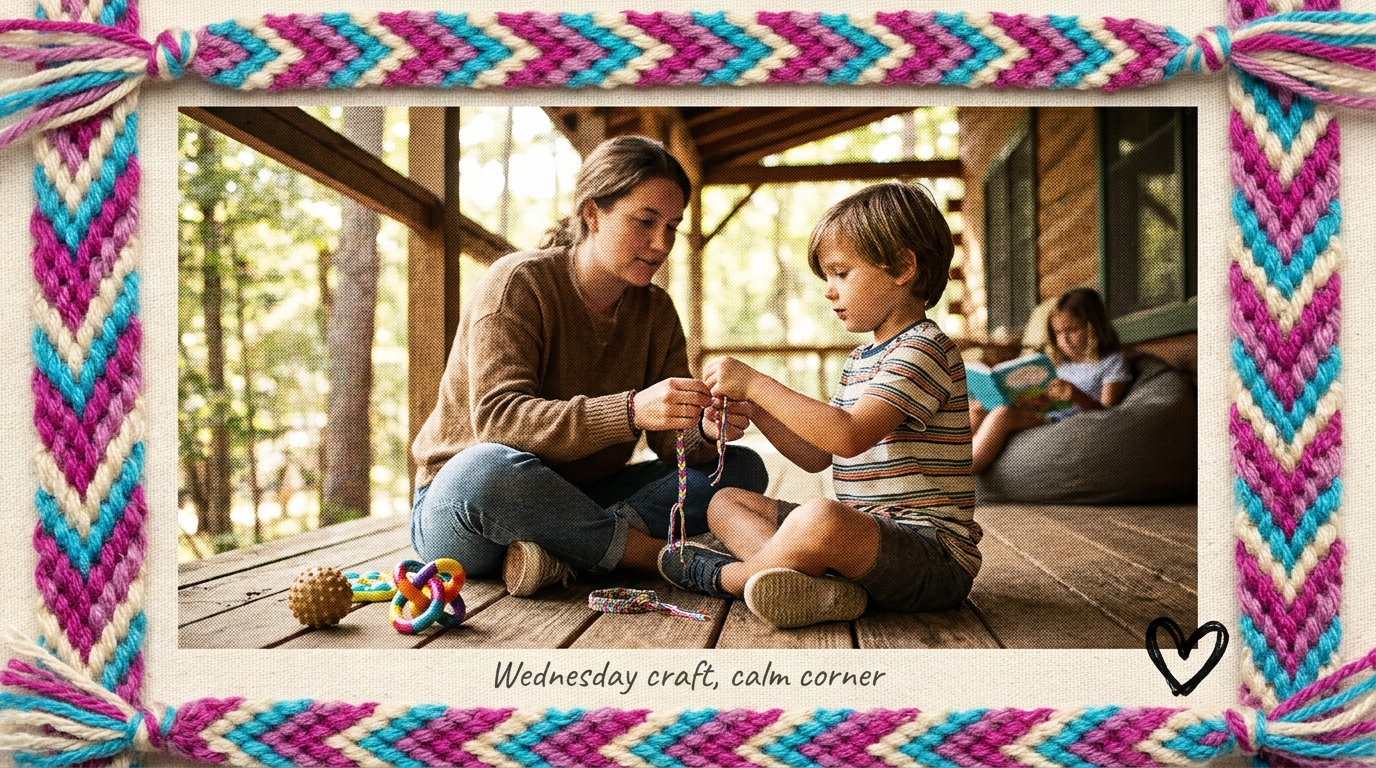
A mainstream camp with well-trained inclusive staff often works better than a "special-needs-specific" camp for kids with mild-to-moderate needs. The mixed peer group teaches social skills a specialty program can't replicate. The specialty camps — Ramapo, Nuhop, Ramah Tikvah, Hillel-run inclusion tracks — exist for a reason, and they're the right call for kids who need a 1:1 aide, have real medical complexity, or have significant behavioral dysregulation that a mainstream camp isn't staffed for.
- Ask for specifics, not credentials. "We have inclusion training" is marketing. "Three days of autism and ADHD training led by Dr. So-and-so, with a Wednesday huddle on every camper's plan" is practice.
- Send the IEP or 504 plus a one-page parent summary two to four weeks before the start date. Follow up with the director, not the intake coordinator.
- Sensory retreat spaces should be always-open, not permission-based.
- Ask for a parent reference whose kid has a similar profile. Another parent will tell you what actually happened on day three.
- Mild or moderate: try a well-staffed mainstream camp first. High support: go specialty from the start.
What kind of camp actually fits your kid.
Mild needs — a mainstream inclusive camp is the right call
This is the sweet spot for mainstream camps with inclusive staff. Kids with well-managed ADHD, autism that's self-aware and verbal with mild sensory stuff, anxiety that medication and coping strategies keep in hand, or learning differences that don't need academic support in a camp setting. The win is the mixed peer group, the range of programming, and the chance for social-skill generalization. What you need from the camp: trained staff, not just willing staff — and the operational pieces below.
Moderate needs — mainstream, with extra support built in
Kids who need their IEP or 504 accommodations actively followed, occasional 1:1 prompting, scheduled breaks beyond what's in the regular schedule, or a behavior plan coordinated with parents. Some mainstream camps run a "bridge" track — extra staff and modified expectations — that sits between standard inclusion and a specialty program. Ask specifically: "Do you have campers on support plans this summer? Walk me through how that works in practice."
High needs — specialty programs from the start
Kids who need a 1:1 aide all day, significant medical coordination (seizure management, feeding tubes, complex medication regimens), frequent behavioral dysregulation that requires trained intervention, or academic supports that can't pause for the summer. The programs built around these kids include Camp Ramapo in New York, Camp Nuhop in Ohio, Camp Ramah Tikvah (multiple locations), the Center for Discovery Summer Program, Eagle Hill School Summer, and Fenn School Summer. These aren't "regular camp with extra help" — they're purpose-built from the ground up. Typical cost runs $1,500 to $3,000 a week, and for the right kid, it's worth every dollar.
The interview for an inclusive camp.
- Can you describe a camper with a similar profile from last summer? A specific story is a sign of real experience. A pivot to generic answers is marketing.
- Who designs your inclusion training, and how often does it update? A named designer and an annual refresh signals a serious investment.
- How do you handle behavioral dysregulation in the moment? A good answer names a de-escalation framework and the trained responder who shows up. A weak answer is "we send them to the director."
- What does your quiet or sensory retreat space look like, and how does a kid get to it? It should be visually marked, always open, and stigma-free.
- How do you review and act on IEPs and 504s? Who reads them? How do accommodations make it from paper to the counselor working with your kid?
- What's the staff ratio for kids on support plans? Usually tighter than the general ratio — closer to 1:4 than 1:8 for behavioral support.
- How do you handle medication, especially stimulants with afternoon rebound? Locked storage, trained administration, flexibility on timing when it's useful.
- What's your mid-session communication policy with parents? Structured mid-week check-ins, especially for first-time campers. Not "call if something goes wrong."
- Can I see examples of social stories or visual schedules you've used? Either they have them in a drawer, or they don't.
- How do you train staff to recognize sensory overwhelm before it's a meltdown? A specific answer means real training. "We talk about it" doesn't.
- What do you do if our plan isn't working by day three? Collaboration and real communication, not a silent struggle or a pickup ultimatum.
- Can I speak to a parent of a recent camper with a similar profile? A reference call with another parent is the single most useful data point you'll get.
What to send the camp two to four weeks out.
Whether you've landed on a mainstream inclusive camp or a specialty program, the pre-camp paperwork matters almost as much as the camp choice itself. A good packet lands two to four weeks before the session starts and includes:
- The full IEP or 504 plan, unredacted, current.
- A one-page parent summary — non-negotiable. Short sections: "What works," "What doesn't," "Warning signs," "De-escalation approach," "Who to call," "Medication and schedule."
- A short video of your kid. Staff seeing them before drop-off reduces the first-day awkwardness on both sides.
- A transition object. Whatever helps — a stuffed animal, a photo book, a fidget tool. If it's unusual, pre-arrange with the camp.
- Communication expectations. Your preferred channel (text, email), an acceptable response time, and what counts as an emergency vs a regular update.
- Explicit permission to adjust the plan. Authorize the camp to modify the support plan mid-session within defined bounds — don't make them chase you for permission to try something small.
About two weeks before the start date, follow up with the camp director — not the intake coordinator — to confirm the packet was read and walk through any questions. If the director can't answer, the packet never made it to the right person. Better to find that out in June than on day one.
Questions other parents asked
Specialty camp or mainstream inclusive camp — which is right for my kid?
It depends on how much support they actually need, day to day. Kids with mild-to-moderate ADHD, autism that's well-managed at school, anxiety that coping strategies and medication handle, or learning differences that don't require summer academic support often do better in a mainstream camp with trained inclusive staff. The mixed peer group teaches social skills that a specialty camp, by definition, can't replicate. Kids with higher needs — 1:1 aides, medical complexity, frequent behavioral dysregulation — are better served by programs designed around those needs (Camp Ramah's Tikvah, the Camp at the Center for Discovery, Camp Nuhop, Camp Ramapo). A middle ground exists: some mainstream camps run a 'bridge' track with extra staff for kids who need more than standard but less than specialty.
What should a camp offer for a kid with ADHD?
Seven concrete things tell you a camp has done the work. A structured daily schedule with predictable transitions. Activity-choice blocks built in (giving a kid agency heads off a lot of meltdowns). Movement breaks inside longer sit-down activities. Clear behavior expectations, posted and repeated — not assumed. Medication administration with locked storage and logged doses. Staff trained on executive-function challenges (losing things, time blindness, impulse control). And a low-stimulus retreat space the kid can use without being stigmatized for it. A camp that just says 'we welcome kids with ADHD' and stops there is making marketing, not accommodation.
What about kids on the autism spectrum?
Six things to look for. First, real experience with the specific autism profile your kid has — verbal or nonverbal, anxious or easy-going, which sensory sensitivities. Second, visual schedules and social stories as part of how they run the day. Third, staff trained on verbal-behavior support. Fourth, a sensory retreat space the kid can always access, not a 'go ask a counselor for permission' setup. Fifth, a path to smaller-group activity options when the main group is too much. Sixth, a willingness to accept IEP and 504 accommodations plus a parent-written behavior plan. The clarifying question: 'What did you do for a recent camper with a similar profile?' A real camp tells you a story. A marketing camp pivots to generic answers.
How can I tell if the training is real?
Ask for specifics, not credentials. 'We have inclusion training' is the kind of thing you put on a brochure. 'Our staff does three days of autism-spectrum and ADHD-specific pre-camp training led by Dr. So-and-so, and we review each camper's individual plan in a Wednesday staff huddle' is what a real program actually does. Good follow-up questions: Can I see the training curriculum? Who designed it? How often does it get updated? Then: can I speak to a parent of a recent camper with a similar profile? That last one separates the performers from the practitioners.
Will my IEP or 504 plan actually transfer to camp?
Legally, no — IEPs and 504s are school documents and camps aren't obligated to follow them. Practically, the good inclusive camps will read them, pull the relevant accommodations (quiet space, scheduled breaks, medication, 1:1 support), and build a camp-specific support plan from that. Send your IEP or 504 plus a one-page parent summary two to four weeks before the session starts. Then follow up with the camp director — not the intake coordinator — to confirm they've actually read it.
What about medication at camp?
Expect locked storage, dose-level logging, and trained staff administering it (a nurse at overnight camps; a designated person at day camps). You'll sign an administration authorization form. If your kid needs an EpiPen, ask how quickly staff can get to one from wherever the group is. For stimulant medications, ask whether there's flexibility around weekend 'med holidays' if that's part of your routine, and how the camp handles the late-afternoon rebound window. Serious camps collaborate with you on the medication plan. Weaker camps treat medication as your problem to manage from a distance.
What about anxiety?
Anxiety is the most common mental-health challenge camps deal with now. The good ones do five things well. They communicate before camp starts — what the schedule looks like, photos of the facilities, counselor names, a realistic account of the first day. They offer slow-intake options if your kid needs them: a drop-off ladder, a shorter first day. They run regulated check-ins rather than a vague 'find us if you need anything.' They have sensory-calming tools and quiet spaces on hand. And they have a parent-communication policy that supports without enabling avoidance — scheduled check-ins, not same-day pickup at the first sign of trouble. A camp that brags about having a 'no homesickness' policy has not thought seriously about anxiety.
Is overnight camp a good idea for a neurodiverse kid?
For the right kid, yes. Overnight camps built specifically for neurodiverse kids (Ramapo, Nuhop, Ramah Tikvah, Hillel-run programs with inclusion tracks) can produce the kind of transformation a day camp can't match. Start with a 3-to-5-night session, not two weeks. For kids with high support needs or significant separation anxiety, overnight may not be the right move yet — another summer or two of day camp, then try again. The usual overnight-readiness signals apply, with extra weight on: can your kid ask for a break on their own, can they sleep without a parent-specific routine, and do they have a history of successful 24-hour separations.
What about sensory processing challenges?
Four things matter. A quiet, low-stimulus retreat space that's always available. Food options that respect sensory eating profiles — no force-eating, real alternatives if the main menu doesn't work. Clothing flexibility, which usually means no uniform and no mandatory scratchy fabrics. And staff trained to recognize sensory overwhelm before it becomes a meltdown. Ask: what does your quiet space actually look like, and how does a kid get to it? If the answer is 'they just ask a counselor,' the architecture isn't right yet. A usable retreat space is visually marked, always open, and stigma-free.
How do I find neurodiverse-friendly camps near me?
Four places to start. First, our directory's financial-aid filter plus your metro's general list, filtered for camps with year-round programming — year-round programming usually signals a deeper investment in inclusion. Second, the American Camp Association's Camp Finder, which filters by 'Inclusive' and 'Special Needs.' Third, autism-specific databases like the Autism Speaks summer-camps resource, plus your local autism-society chapter. Fourth — often the best source — word of mouth through your kid's IEP team, pediatric OT or PT, or school psychologist. They usually know which local camps actually do the work, versus which ones just say they do.
Where this comes from. Drawn from conversations with more than thirty inclusion directors and camp directors during the 2024 and 2025 seasons, the Autism Speaks summer-camps resources, the American Camp Association's inclusion framework, and the pattern of questions parents bring to us most often.
Scope. Day and overnight camps for ages 4 to 17 serving kids with ADHD, autism, anxiety, sensory processing differences, and learning differences. This guide doesn't cover residential therapeutic programs or clinical behavioral-health programs — those belong in a different conversation.
Bias note. Written by a parent, reviewed by our editor. Not a child psychologist, developmental pediatrician, or special-education specialist. For clinical guidance on your specific kid's readiness or support needs, talk to their care team.
Last reviewed. 2026-04-18. Next review: 2026-10-01.
Related guides
Find camps that fit your kid.
Sort, filter, and shortlist camps by the specifics you care about — small groups, sensory-friendly spaces, trained staff.
Open the planner →