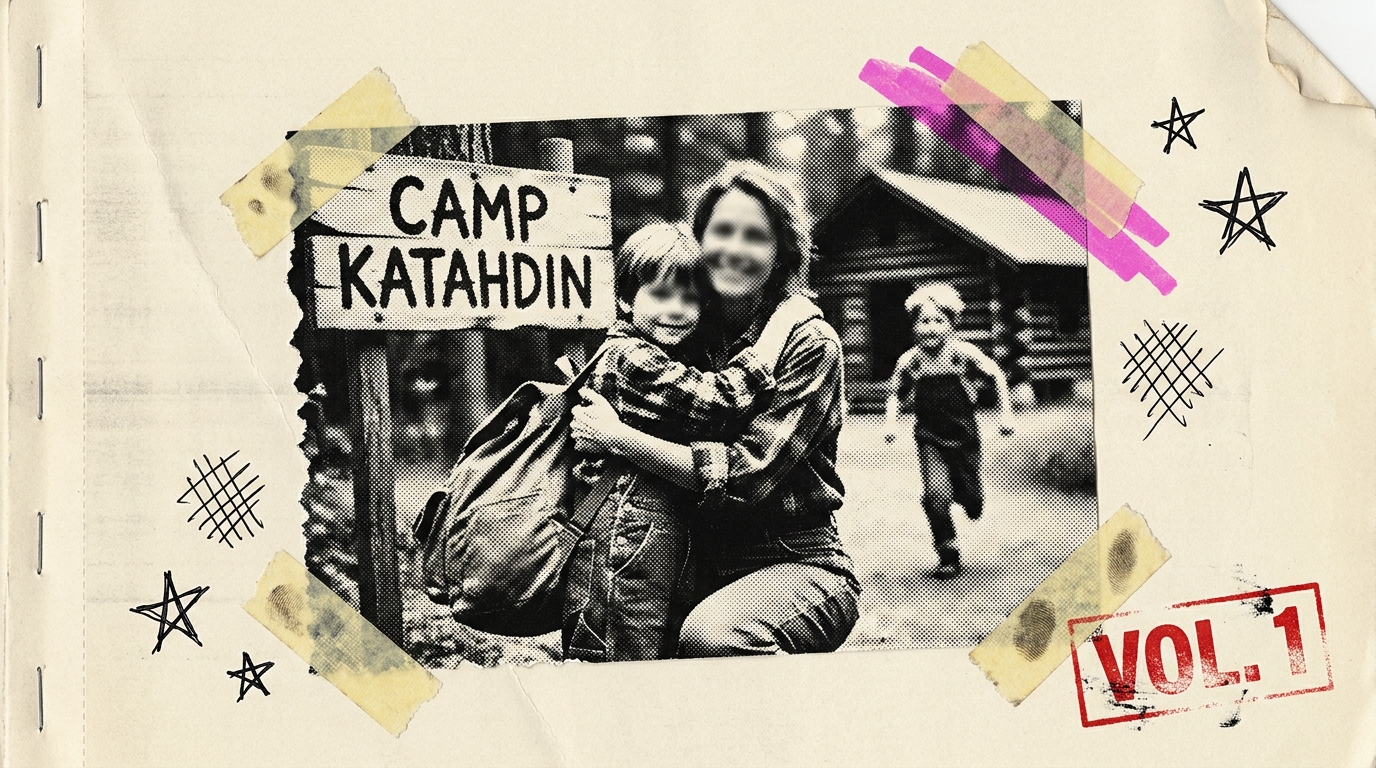
Every summer-camp drop-off goes better when the parent has a script. The first day is not a test of how brave your kid is — it is a logistics problem with a social layer, and the two variables you control are timing and tone. Get those right and most of the rest takes care of itself.
The five-minute drop-off ritual
A good first-day drop-off takes about five minutes and has three beats: arrive, hand off, leave. Do the same version every morning of week one. Predictability is the single biggest lever parents have over first-day anxiety.
Park, walk in together, find a staff member and introduce your kid by name. Say one short thing about what the kid is excited about (“Mira’s been talking about the ropes course all week”). Let the counselor take it from there. Give a quick hug, tell your kid when you’ll be back, and walk out without turning around. Counselors will tell you the parents who do this have kids who settle the fastest.
The five-minute cap matters. Past that, you are no longer reassuring — you are signaling that something is wrong. Kids read the extra minutes as evidence that the situation deserves worry.
Two mistakes that amplify first-day nerves
Two specific parent moves make first-day drop-off dramatically harder, and they are both well-intentioned. The first is the long, repeated goodbye. The second is the “if you don’t like it, we’ll figure something out” pre-negotiation.
The long goodbye keeps resetting the separation clock. Every hug, every “one more thing,” every turn-around-at-the-door stretches the moment your kid has to get through. Kids who get a 30-second goodbye are usually fine by the time the parent is back in the car.
The pre-negotiation is worse because it plants an exit ramp. If you tell a seven-year-old the night before that they can quit if they hate it, you have told them the camp is on trial. Now every neutral moment — a slow transition, a lunch they don’t recognize — becomes evidence for the case. Save that conversation for after day three, when you actually have real information.
What to pack the night before
Pack the backpack the night before, not in the morning. A morning scramble is the single most common reason first-day drop-offs start badly, because the kid walks in already dysregulated from the 7am hunt for a water bottle. Lay it out on the kitchen counter after dinner. Our packing list guide covers what actually matters.
The minimum: water bottle (labeled), lunch (if not provided), sun hat, sunscreen already applied before you leave the house, a change of clothes in a ziplock, and a small comfort item the camp allows. Check the camp’s own list for specifics — many day camps ban phones, smartwatches, and anything valuable, and a confiscation on day one is a bad start.
Write the kid’s first name on everything in big block letters. Not their full name, not a cursive label, not a cute monogram — block letters a counselor can read from across a field.
How to read your kid’s stress signals
Real first-day stress shows up as quiet withdrawal, loss of appetite, or an unusual physical complaint like a stomachache. It does not usually show up as tears at the gate — those are normal transition tears and pass inside ten minutes.
If your kid comes home flat, pick one specific question: “Who did you sit with at lunch?” Not “How was camp?” which gets you “fine” every time. A named peer by day three is the strongest signal that things are on track. No named peer by day five is a real flag, and emailing the camp director is the right next step.
Sleep and appetite bounce back by day four for most kids. If they don’t, something specific is going on and the camp staff almost always knows what. A good camp director will tell you when you ask directly. That conversation is much easier to have at 4:30pm on a Thursday than at 7:45am on Friday morning.
First-day drop-off is mostly about you, not your kid. Keep the ritual short, keep the tone flat, leave cleanly. Your kid is probably fine 90 seconds after you pull out of the lot — the question is whether you are.