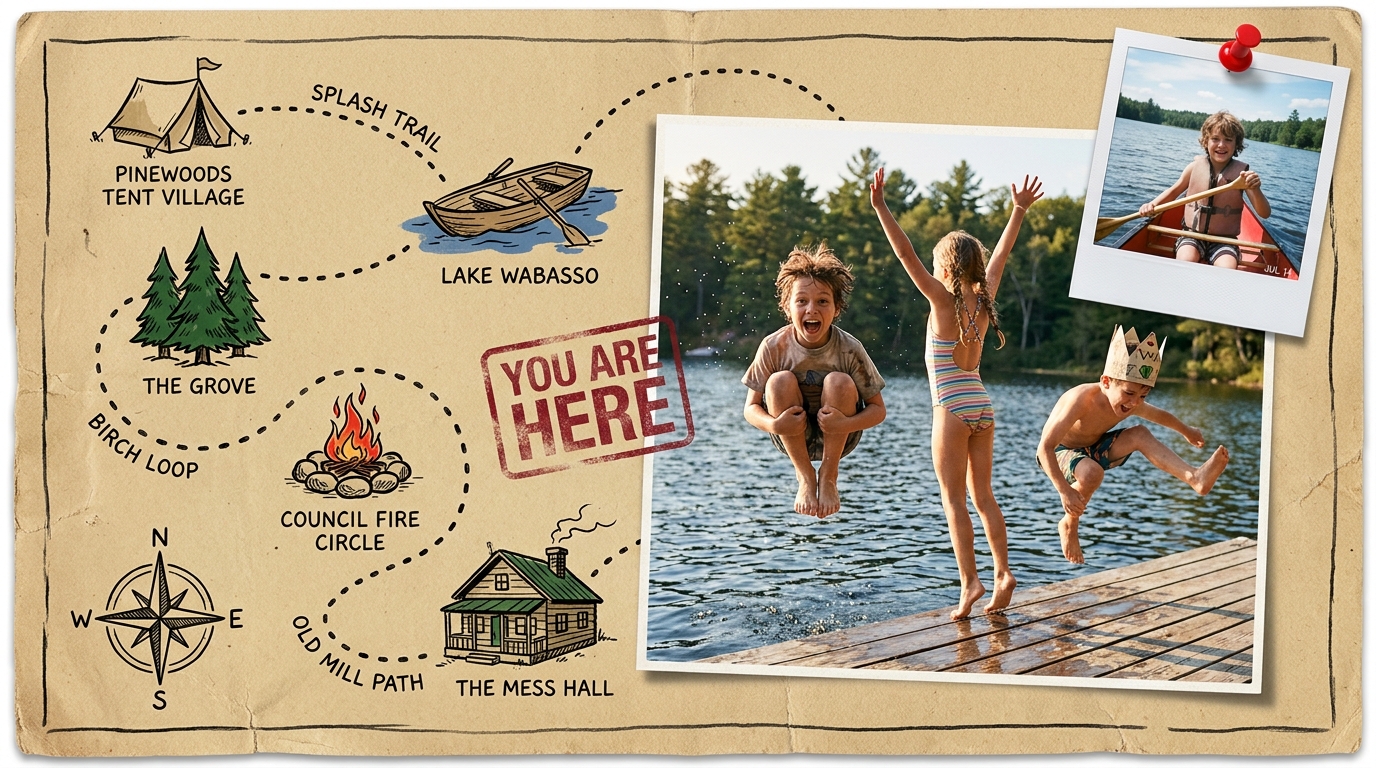
Across Palo Alto camps that accept ages 10 to 12, the 2026 catalog leans hard toward specialty: Stanford-affiliated programs at the campus and adjacent Town & Country sites, independent-school middle-summer extensions at Castilleja, Sacred Heart Prep, and Menlo, plus the Galileo and Camp Edmo multi-activity options for families who want a more traditional cohort model. Pricing for tweens runs $625 to $1,500 per week — the metro’s tech-industry-parent demand from Google, Meta, and Stanford spillover from Mountain View and Menlo Park sustains a premium that holds across most of the catalog.
Why 10 to 12 is the specialization tipping point in Palo Alto
Middle school is when Palo Alto kids commit. The local market reflects parental expectation more than developmental science here — by fifth grade, families have usually picked a thread (competitive swim, robotics-team-bound STEM, classical theater, club soccer, debate prep) and the summer schedule services that thread. The sampler camps that worked at 7 to 9 are largely off the table by 10 — the kid is bored, the parents see it as wasted weeks, and the local social ecology rewards depth over breadth.
This isn’t necessarily right. Sampler weeks at this age can re-energize a kid who is over-specialized too early, and overnight camps in the Sierra or Sonoma County deliberately strip away specialization for two to four weeks of cohort-driven multi-activity living. The healthiest Palo Alto summers at 10 to 12 mix one anchor specialty thread (three to five weeks at Stanford or an independent-school program) with one or two overnight weeks that break the specialization rhythm.
What good looks like at this age
Real instruction in the discipline. A 10-year-old in a robotics camp should be soldering, programming, and competing — not “exploring” robotics through a craft project. A 12-year-old in a theater intensive should be off-book by Wednesday, blocking a real scene by Thursday, performing it Friday. The Palo Alto specialty market at this age delivers this when the program runs through Stanford, Castilleja, Sacred Heart, or Menlo summer — the bar is high.
CIT prep beginnings. Twelve is the typical first-CIT-prep year at the camps that take leadership-track tweens (some Sierra overnight camps, some YMCA day camps). Even pre-CIT, a good program at this age starts giving the camper structured roles — equipment manager, group navigator, peer-mentor for younger kids — that build toward formal leadership in the 13-15 band.
Longer days are developmentally fine. The full-day specialty model (8:30 to 4:00 with optional 5:30 extended) works well for this age in a way it does not for 5- to 9-year-olds. Stanford Pre-Collegiate runs longer days because the discipline demands it, and middle schoolers can sustain a six-hour skill-acquisition arc.
A named instructor with credentials. The Palo Alto premium pricing buys a real teacher: a Stanford grad student running the AI camp, a credentialed swim coach with NCAA experience running the swim week, a working theater director running the drama intensive. If the camp can’t tell you who is teaching the discipline, you’re paying premium pricing for non-premium instruction.
The four Palo Alto formats that fit tweens
-
Stanford-affiliated specialty programs. Stanford Pre-Collegiate Middle School, iD Tech at Stanford, Stanford Sports Camps (basketball, soccer, swim, water polo, golf), Stanford Aquatics swim, SPCS Junior Statesmen. $1,100 to $1,500 per week, full-day, single-discipline depth, named credentialed instructors. Best for the depth-over-breadth thread.
-
Independent-school middle-summer programs. Castilleja Middle Summer, Sacred Heart Prep Middle Summer, Menlo School Middle Summer, Phillips Brooks alumni programs. $1,000 to $1,400 per week, full-day, internal-applications-first in early February. Best for families inside those communities — strong cohort and the same teachers as the school year.
-
Multi-activity middle-school day camps. Galileo Innovation Camp Middle School, Camp Edmo, Steve & Kate’s, YMCA Page Mill, Palo Alto Family YMCA. $625 to $950 per week, full-day, traditional rotating-station model. Best as a counterweight to specialty weeks — the middle-school version of a “real summer camp” experience.
-
Northern California overnight breakaway weeks. Camp Tawonga, Plantation Farm Camp, Walton’s Grizzly Lodge, Camp Augusta, Camp Loma Mar, YMCA Camp Jones Gulch. $1,200 to $1,800 per week (residential) or two- to four-week sessions. Best as a deliberate disruption of the specialty rhythm — the developmental research on this age is unambiguous that overnight time matters.
What to screen out
A specialty camp that won’t tell you the instructor’s credentials in the discipline is selling a brand, not a curriculum. The Stanford and independent-school programs all publish instructor names and bios. The third-party operators that rent Stanford space sometimes don’t — and the gap matters at this age.
A multi-activity camp that quotes a 1:12 or higher cohort ratio for ages 10 to 12 is staffing it as middle-school daycare. The right number is 1:10 cohort with 1:8 or better at activity blocks.
A camp that schedules eight or more activity blocks per day with no protected time. By middle school, kids need real lunch and at least 30 minutes of unstructured recovery time. Programs that compress this to “maximize value” produce wired, brittle kids by Wednesday.
A camp that markets exclusively on parental anxiety — college prep at 11, “future Stanford admit” framing at 10. The Palo Alto specialty market at this age is high-quality precisely because the best programs sell the kid on the discipline, not the parent on the resume. Ten- and 11-year-olds know the difference.
Where to start
Begin with the Summer Camp Planner Palo Alto age 10-12 directory filtered to programs accepting middle-school-age kids, then narrow by specialty and full-week versus single-week format. The Palo Alto summer camps guide covers the metro’s neighborhood logistics, Stanford parking realities, and the calendar of when each program opens. Shortlist three or four candidates: one anchor specialty thread that runs three to five weeks, one or two overnight breakaway weeks at a Sierra or Sonoma County camp, and one Galileo or Camp Edmo multi-activity week as a counterweight to specialization.
Most Palo Alto families with a tween end up with this anchor-plus-breakaway pattern by mid-spring. It’s the version of summer the local market is built for, and it produces kids who come into seventh and eighth grade with both depth and stamina.
Methodology
This piece reflects the live Summer Camp Planner catalog of 19,500+ US and Canada camps, filtered to programs serving Palo Alto and accepting ages 10 to 12 for summer 2026. Pricing references draw from pricing_stats, refreshed nightly against the catalog. Format descriptions reflect dominant patterns in the metro; specific camp names are illustrative and not endorsements. Editorial review by Justin Leader.