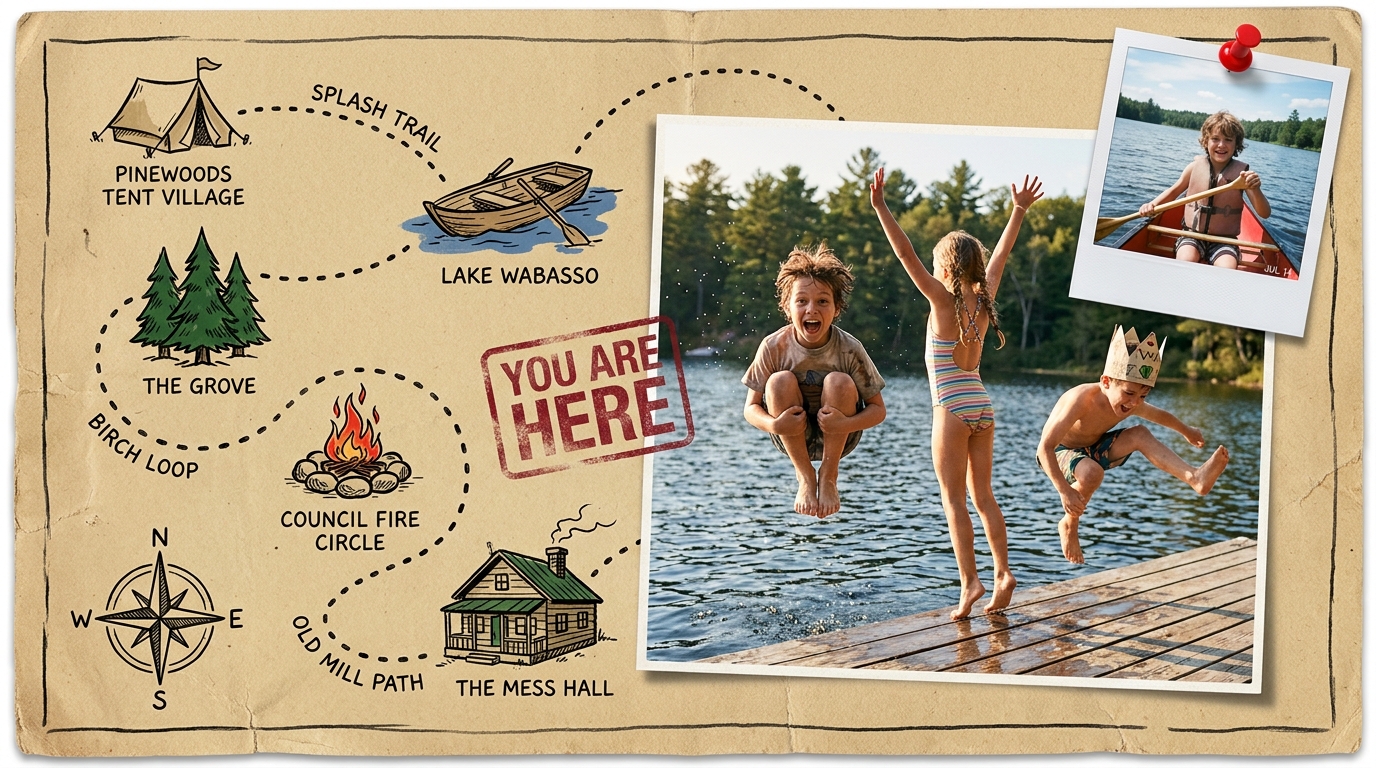
The 10 to 12 band is the year camp shopping changes shape. The questions that drove choices at 6 and 8 — separation, ritual, ratio — give way to a different stack: what’s the peer group, what’s the skill progression, when does my kid get a stretch week away from home, and how do I bridge from camp into middle school without losing the friend network the summer just built.
Across 360+ Pittsburgh-area camps that accept ages 10 to 12, the market is unusually deep for a metro this size. Carnegie Mellon and Pitt anchor academic and STEM tracks, the JCC of Greater Pittsburgh runs strong traditional and specialty programming, the Sewickley Valley YMCA and other Y branches handle the swim-spine traditional middle, and the Allegheny River and Laurel Highlands geography opens kayaking, rowing, hiking, and accredited overnight camps that families in flatter metros can’t easily reach.
The middle-school transition is doing real work here
A camp at this age is not just child care. For a 10, 11, or 12 year old, summer is when kids start sorting out who they want to be in middle school — what tribe, what interests, what self. The camp choice should track that shift:
- Pick interest, not bus stop. The convenient camp at 7 is the right camp at 7. At 11 it’s the wrong camp. A kid this age will tolerate a longer commute for a program built around something they’re actually trying to get good at.
- Build a peer group outside school. The strongest argument for overnight at this age is the social one — a cabin of 8 kids who didn’t go to your kid’s school is a different friend network than the daycare-since-kindergarten one.
- Look for first leadership ramps. Some Pittsburgh programs run a junior-CIT track for rising 7th graders. Even an informal “peer helper” role inside a specialty program builds the muscle.
- Stop bundling siblings. A 10 year old and a 7 year old should not, generally, be in the same camp at the same time. The 10 year old will defer to the younger sibling and not stretch.
How Pittsburgh pricing breaks down
The 2026 Pittsburgh pricing picture for ages 10 to 12:
- City rec and county-park programs (Citiparks, Allegheny County parks): $175 to $310 per week. Limited at this age — many tween-focused programs sit above this floor.
- Traditional day camps and Y/JCC programs (JCC of Greater Pittsburgh, Sewickley Valley YMCA, North Hills YMCA, Thelma Lovette YMCA): $385 to $510 per week.
- Specialty STEM, music, and performing-arts day camps (Pitt Future Scholars-style summer programs, Pittsburgh Filmmakers, Carnegie Museum youth programs, music conservatories in Mt Lebanon and Squirrel Hill): $525 to $750 per week.
- Competitive-sport day camps (rowing on the Allegheny, soccer academies in the South Hills): $475 to $725 per week.
- Overnight camps (YMCA Camp Kon-O-Kwee Spencer, Laurel Highlands ACA-accredited camps): $725 to $1,400 per week.
The US 2026 median is $402 per week. Pittsburgh tween day-camp pricing runs slightly above the national median; overnight is substantially above by design — the residential infrastructure costs more.
Camp formats that actually fit tweens in Pittsburgh
Two-week specialty intensives. Carnegie Mellon and Pitt summer programs, music-conservatory blocks, and academic enrichment camps run 2-week sessions where a kid actually moves the needle on a skill. Better fit for this age than a string of unrelated 1-week samplers.
First overnight at a Laurel Highlands camp. Pittsburgh’s geography is unusual — a 90-minute drive east lands you at multiple ACA-accredited overnight camps with 1-week starter sessions. That’s a meaningful advantage over metros where the closest overnight camp is 4+ hours away.
Three-rivers water sports. Rowing, kayaking, and sailing programs run on the Allegheny, the Ohio, and the Monongahela that don’t exist in the same density anywhere else in the eastern US for kids this age. If your kid leans toward water, this is a Pittsburgh-specific edge.
Park-based outdoor day camps. Frick Park, Schenley Park, and North Park nature day camps run morning-into-afternoon programs that hold up in Pittsburgh’s temperate summers — outdoor blocks actually run, unlike in southern metros where 11 a.m. forces everyone indoors.
Red flags to screen out
- A specialty camp where the schedule is 80% activity, 20% instruction. At this age your kid wants to get better at the thing — a camp that’s mostly free play in the medium is the wrong tier.
- “We mix ages 8 to 14.” That’s not a tween camp; that’s a daycare with a wide door. The strong programs cohort 10 to 12 distinctly.
- An overnight camp where parents can drop in unannounced. ACA-accredited camps don’t operate that way for safety reasons. A camp that does is signaling something off.
- “Phones allowed during the day at our day camp.” Optional, but worth knowing — phone-permissive day camps at this age trend toward fragmented social experience.
- No CIT-to-counselor breakdown when asked. The strong camps publish or volunteer this. Camps that won’t tell you usually have a reason.
CIT prep starts here, quietly
Most Pittsburgh families don’t think about CIT positions until the kid is 14. The kids who land the strongest positions at 16 started laying groundwork at 11 or 12 — same camp two summers in a row, recognizable to the staff, asked to help with the younger group during free play, named in the year-end thank-you note. None of that is formal at this age, but it’s the difference at 16 between a paid CIT slot at a Laurel Highlands accredited camp and the parent applying everywhere for their kid in February.
Worth thinking about now, even if quietly: which camp would you want this kid CIT’ing at in 2030, and is that the camp they’re going to this summer.
Where to start in Pittsburgh
Build the summer around two anchors: one specialty intensive (a 2-week music block at the JCC, a Pittsburgh Filmmakers session, a Pitt or CMU summer program if your kid has the level for it), and one stretch week — either a Laurel Highlands overnight starter or a competitive-sport camp that runs longer hours and includes a 1- or 2-night sleepover component. Fill the rest with one or two specialty day camps and a single rec-center week to give the schedule slack.
A workable 8-week shape for a Pittsburgh 11 year old in 2026: 1 week first-overnight at a Laurel Highlands ACA camp, 2 weeks specialty intensive (music conservatory, Pittsburgh Filmmakers, or a Carnegie Museum block), 2 weeks competitive-sport academy or rowing on the Allegheny, 2 weeks JCC or Y traditional with friends, and 1 week off. Total cost typically lands in the $4,000 to $6,500 range depending on whether the overnight and specialty tiers run higher or lower.
Browse all tween Pittsburgh options in the Pittsburgh age 10 to 12 directory, and read the Pittsburgh summer camps guide for the wider view of how Carnegie Mellon, Pitt, the JCC, the Y network, and the three-rivers geography shape what’s available.
Methodology
Pricing figures pull from camp_catalog rows scoped to metro:pittsburgh with confirmed 2026 rates, filtered to programs whose age range overlaps 10 to 12. Ratio and format references draw from program pages plus pricing_stats refreshed nightly. Reviewed and published by Justin Leader.