Jacksonville’s academic-camp scene looks thin if you only search for the word “academic,” and much fuller once you count the STEM-learning programs. Our catalog lists 171 active Jacksonville camps; one is tagged academic (Duval County Public Schools Summer School) and 23 more are STEM programs that teach real content — coding, engineering, electricity, woodworking. Using last summer’s prices, half-day weeks ran $267 to $415, and the public summer school is free for eligible students. Here’s how to plan summer 2027 around them.
Why Duval County’s school landscape shapes summer learning
Duval County Public Schools anchors the free end. Its summer school runs at various DCPS campuses for ages 5 to 18, mornings only (8:00 a.m. to 12:30 p.m. in 2026), and is free for eligible students. For many families it is the first call, not the last.
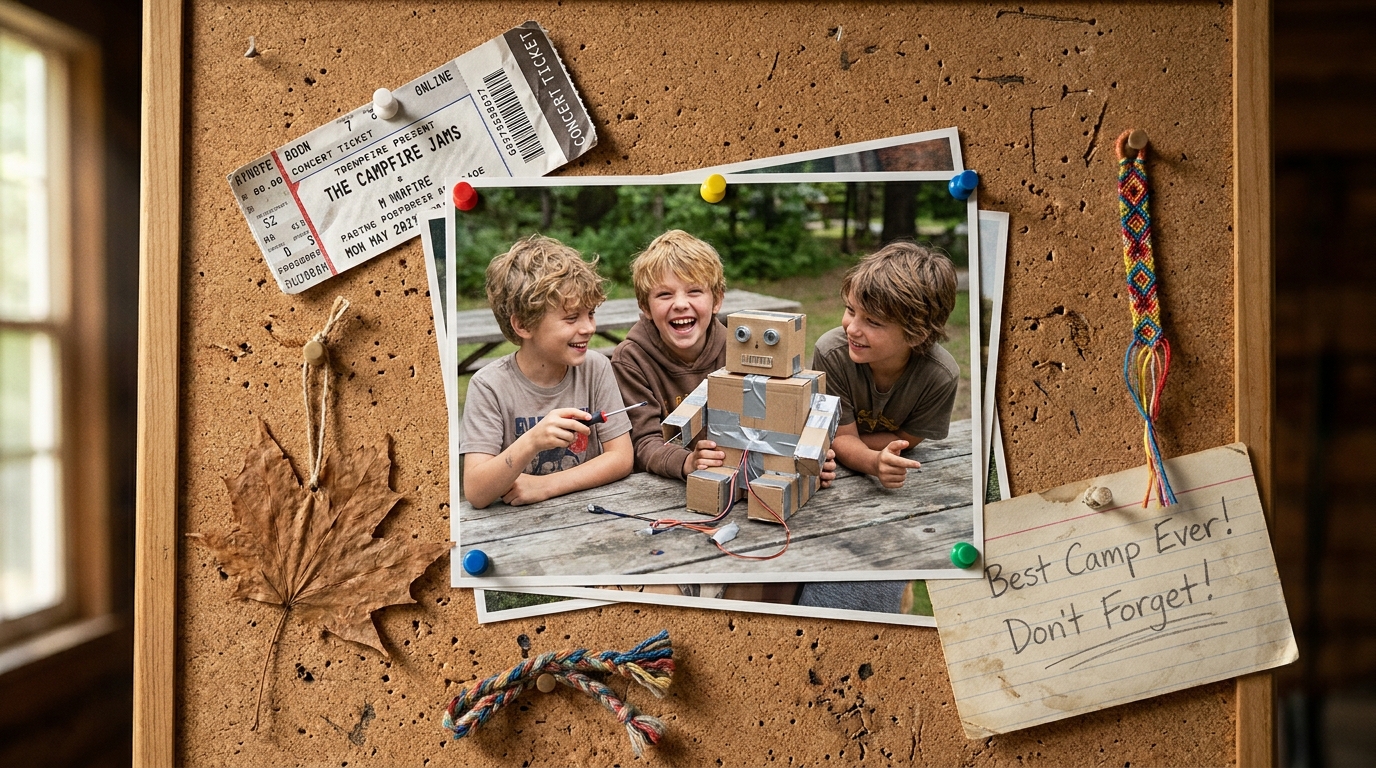
The University of North Florida in southside Jacksonville hosts iD Tech’s Jacksonville camps, which cover coding, game design, robotics, and digital art across three age bands (7-9, 10-12, and 13-17), running 9 a.m. to 3 p.m. On the independent side, Bolts & Bytes in San Marco runs small half-day workshops — woodworking with real tools, electricity and invention, spy tech, battle bots — for ages 6-9 and 10-13. B3 Bricks Bots & Beakers runs half-day science and building weeks for ages 5 to 14 at multiple locations.
Private schools such as Bolles and Episcopal, Jacksonville University, and tutoring centers also run summer programming, but they don’t list academic camps with us yet. Ask them directly for 2027 dates and rates.
Pricing across Jacksonville academic camps
All figures are 2026 prices from our listings. Expect 2027 to land nearby, and confirm before you budget:
- Public tier: Free. Duval County Public Schools Summer School, for eligible DCPS students.
- Independent half-day tier: $267-$415 per week. B3 Bricks Bots & Beakers ($267-$415) and Bolts & Bytes ($395 per half-day week).
- University-hosted tier: iD Tech at UNF had not posted 2026 pricing when we last checked; full-day 9-to-3 format.
- Private-school and tutoring-center programs: not in our Jacksonville listings. Ask for the posted weekly rate, what’s included, and sibling discounts.
Half-day pricing makes two-camp days possible: a morning workshop plus an afternoon at the beach or a second half-day program. Lunch is rarely included at half-day programs; pack it.
Four Jacksonville academic camps worth a closer look
- Duval County Public Schools Summer School — various DCPS campuses. Ages 5-18, 8:00 a.m. to 12:30 p.m. in 2026. Free for eligible students.
- iD Tech Camps at the University of North Florida — UNF campus, southside. Coding (Python, Lua, C#), game design, VEX robotics, and digital art for ages 7-17, 9 a.m. to 3 p.m.
- Bolts & Bytes — San Marco. Half-day woodworking, electricity and invention, spy tech, and battle-bot workshops for ages 6-9 and 10-13; $395 per week in 2026.
- B3 Bricks Bots & Beakers Summer Camp — multiple Jacksonville locations. Half-day science and building weeks for ages 5-14; $267-$415 per week in 2026.
For the complete directory by neighborhood, age band, and financial aid status, see Jacksonville camps and the Jacksonville STEM filter.
Age and format match-ups
Academic camps work differently at different ages — the format matters as much as the subject:
- Ages 5-7: “Reading adventure” or “science explorer” weeks. Hands-on, play-disguised academics. Half-day plenty.
- Ages 8-10: Skill-targeted enrichment makes sense — reading-level lift, math fluency, writing-process camps. Three to four hours daily.
- Ages 11-13: Subject-specific intensives. Algebra prep, essay writing, science specialty (marine biology fits Jacksonville especially well — St. Johns River and Atlantic proximity). Full-day works.
- Ages 14-16: Test prep, AP-subject summer courses, college-essay starters, or a serious coding track. Match the program to a genuine fall goal.
- Ages 16-18: Pre-college programs. Real academic credit options. Resume value when they’re at named universities.
Beach-balance is the Jacksonville academic-camp design constraint
The thing that distinguishes Jacksonville academic camps from those in other metros is how nearly all of them are designed around half-day or beach-aware formats. Atlantic Beach, Jax Beach, and Neptune Beach are 15-25 minutes from most academic-camp locations. The St. Johns River and the proximity to Florida State Parks (Little Talbot Island, Big Talbot, Faver-Dykes) mean that even the families committed to summer academic acceleration usually want their afternoons unstructured.
Camps that respect this run mornings only, or front-load academic work in the morning and use afternoons for outdoor science, riverfront PE, or low-pressure activity. Camps that try to run a 9-to-5 academic block in Jacksonville summer humidity are working against both kid biology and family logistics. The strongest options recognize this and design around it.
What to ask before you click “register”
Five questions that flush out fit faster than the camp brochure:
- Who’s teaching? Certified classroom teachers, undergraduate tutors, or graduate students? Each is appropriate for some age and subject combos and not others.
- What’s the diagnostic? A quality academic camp starts by figuring out where the kid actually is. If there’s no diagnostic, the program is generic.
- What does the parent see at the end? A report? A product (essay, project, certified math level)? An exit conference? If nothing tangible, you can’t measure ROI.
- How does the camp handle the kid who’s bored or behind? Differentiated instruction inside a one-week camp is hard. Ask the program lead how they handle it specifically.
- Half-day or full-day? For most Jacksonville families, half-day plus beach is a better summer than full-day classroom. Match the structure to your real plan, not the aspirational one.
Methodology
Written against the Summer Camp Planner US + Canada catalog of 17,800+ active camps, as of November 5, 2026. Camp names, ages, hours, and prices come from our Jacksonville, FL listings in the academic and STEM categories; prices are 2026 rates, and 2027 rates will replace them as camps publish. Filter the live directory at summer-camp-planner.com for current openings, age bands, and financial-aid status. Editorial review by Justin Leader.