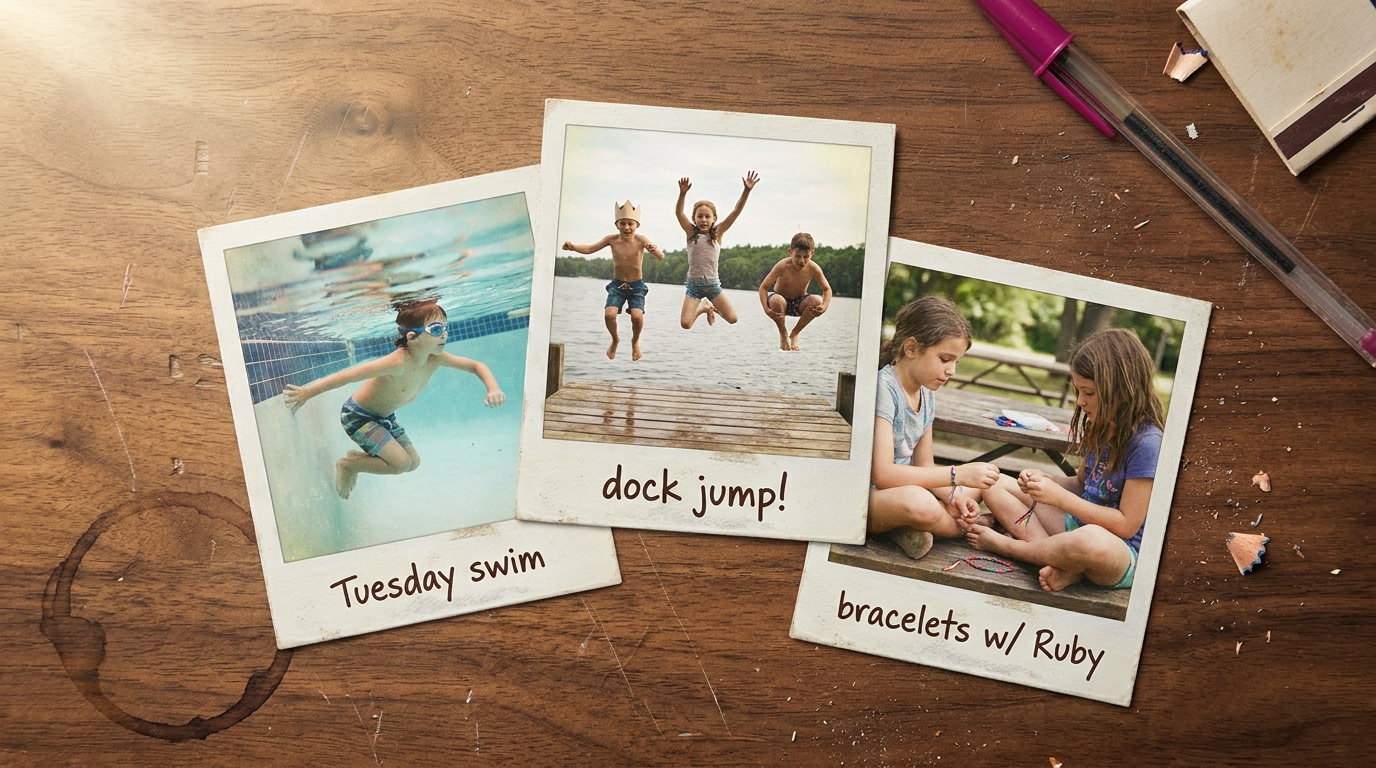
A 7 to 9 year old in Jacksonville is in a sweet spot for camp. The city has real depth at this age — surf and beach camps from Atlantic through Jax Beach, river programs on the St. Johns, MOSH and Jacksonville Zoo specialty weeks, plus the strong independent-school day camps (Bolles, Episcopal, Bishop Kenny). The trick is matching the format to where your kid actually is on confidence, friend-group, and stamina, not just to what’s nearest the house.
What an early-elementary camp week should feel like
By second or third grade, kids can sustain a real full day if the rhythm is right. Morning skill block, lunch, afternoon block with more movement, water break, free choice, pickup. The activities should rotate, but the people shouldn’t — one consistent counselor (or pair of counselors) over the week is what builds the social glue. A camp where the staffing changes day-to-day can’t deliver the friend-group result that makes this age love camp.
Across 178 Jacksonville camps that accept ages 7 to 9, the strongest 2026 weeks pair a single skill focus (swim, surf, theater, robotics) with intentional unstructured time. Pure free-play camps lose this age by mid-week; pure skill-drill camps lose them on Wednesday. The hybrid wins.
The Jacksonville age 7-9 directory is the right starting filter; cross-reference by neighborhood and venue type before comparing prices.
How Jacksonville prices stack up for early elementary
Jacksonville is a notably affordable camp metro for this age. Full-day weeks at the YMCA First Coast, JCC of Jacksonville, and city Parks and Rec sites cluster at $175 to $275. Independent-school day camps (Bolles, Episcopal, Bishop Kenny, San Jose Country Day) run $275 to $425. Specialty programs price higher: surf-and-skate weeks at the Beaches run $325 to $475, MOSH and Jacksonville Zoo science weeks $300 to $425, sailing weeks on the river $400 to $550.
The US 2026 median of $402 per week reflects a national mix; in Jacksonville, you’re consistently a tier below that for full-day programs at this age. See the 2026 pricing guide for how the median is constructed and how to read regional variation.
A specific Jacksonville pattern worth knowing: extended-care add-ons (8 AM drop-off, 5:30 or 6 PM pickup) are usually $40 to $75 per week on top of base tuition and are almost always worth it if both parents work — the savings versus separate aftercare more than cover it.
Formats that fit second through fourth graders here
Four formats consistently work for this age in Jacksonville.
- Independent-school day camps at Bolles (Bartram and San Jose campuses), Episcopal, Bishop Kenny, and Riverside Presbyterian. Stable facility, kindergarten-through-rising-fifth cohorts kept separate, strong staffing.
- JCA and YMCA full-day camps in Mandarin, Southside, the Beaches, and Ponte Vedra. The most affordable option that still delivers a serious daily program.
- Beach-based specialty weeks — surf camps at Jax Beach and Atlantic, ocean-skills weeks, paddleboard camps. These are the standout Jacksonville format and fit the age well from rising 3rd grade up.
- Museum and zoo weeks — MOSH, the Cummer (art), Jacksonville Zoo, the Catty Shack Ranch programs. Half-day or full-day science and art weeks with strong content.
What underperforms at this age: drop-in style programs that don’t hold a stable cohort, “all city” camps that bus 7-year-olds to four different venues a week, and “ages 5 to 12” camps where a 7-year-old gets grouped with a 5-year-old for the whole week.
Red flags to screen out
Five questions to ask before you register.
- Who’s the counselor for the rising 2nd or 3rd grade group, by name, and have they done this age before?
- What’s the ratio for that group specifically — not the camp-wide average?
- What’s the lightning and thunderstorm protocol? (Northeast Florida summers run on afternoon storms; you want a real answer.)
- For beach or pool programs: how many lifeguards, what’s the in-water ratio, and is there a swim-test on day one?
- What does a Wednesday afternoon look like at 2:30 when the kids are tired? If the schedule is identical to Monday morning, that’s a problem.
A camp that can answer all five without consulting a manual is run by people who know what they’re doing.
Where to start in Jacksonville
Start with neighborhood, then format. Riverside, San Marco, and Avondale families have strong walkable options at Riverside Presbyterian, the Cummer, and the JCA’s San Marco programs. Southside and Mandarin lean on JCA Mandarin and Bolles San Jose. Beaches families (Atlantic, Neptune, Jax Beach, Ponte Vedra) have the deepest specialty bench for this age — surf camps, ocean-skills programs, and Beaches Episcopal Day School weeks all cluster here. The Jacksonville directory filtered to age 7-9 surfaces the local options first.
For a wider read on the metro across older ages, the Jacksonville summer camps guide covers the broader landscape — useful when you have a 7-year-old and a 12-year-old and need to triangulate logistics. Mayport and the St. Johns River programs add a maritime dimension that’s specific to this metro and starts to open up around rising 4th grade.
What Jacksonville parents tell us
A consistent Northeast Florida pattern for this age: two weeks of an “anchor” camp (usually the JCA or a school day camp), then one specialty week (surf, MOSH, or art), then a quiet stretch, then maybe one more specialty toward the end of summer. Trying to stack eight or nine consecutive camp weeks at age 7 to 9 reliably backfires by late July, when the heat compounds. The families who plan a real week off in mid-July — beach mornings, pool afternoons, late dinners — get more out of August camp than the families who push through.
The other thing locals know: lightning closes pools and beaches, but it doesn’t close museum and indoor-sports weeks. Mixing one outdoor week with one indoor week per pair of weeks gives you weather resilience without losing the summer-in-Jacksonville feel.