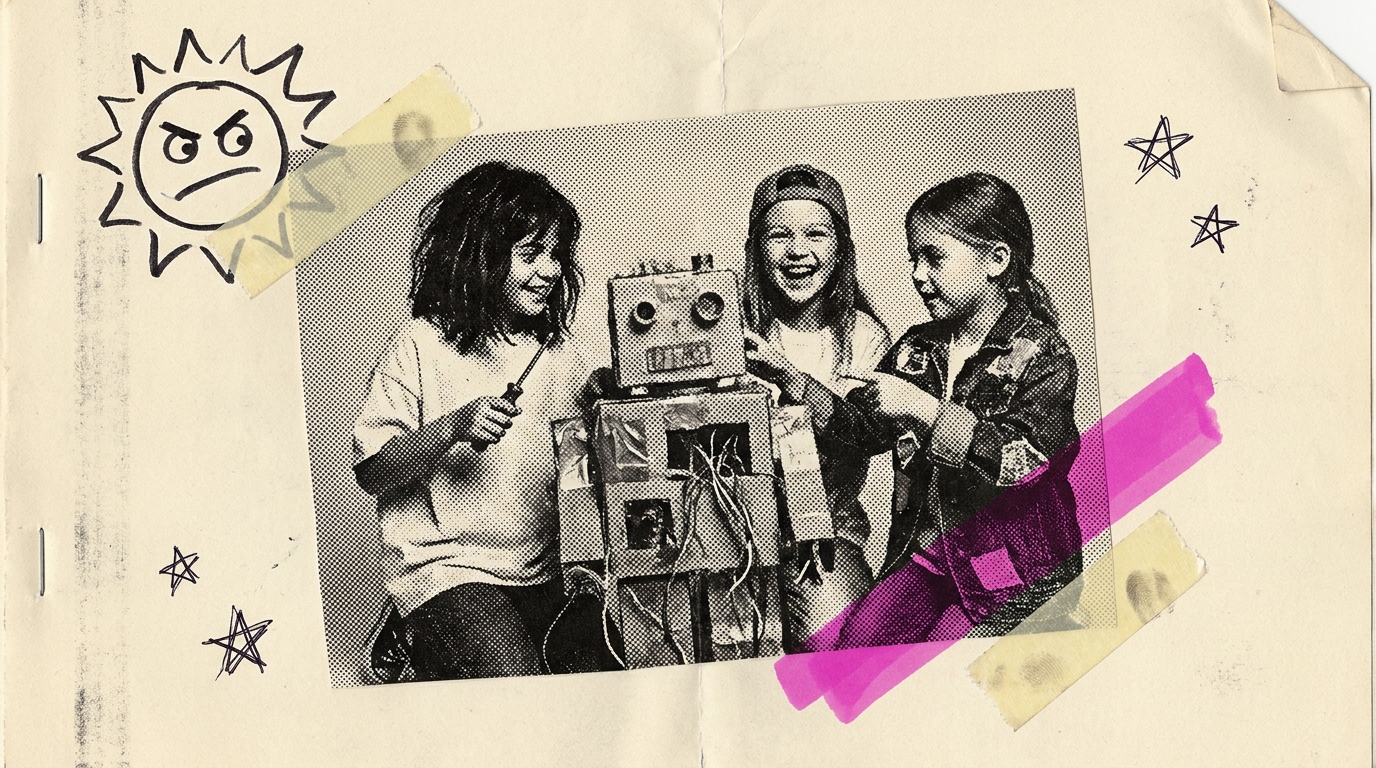
The Bay Area has one of the deepest STEM camp markets in the country, and also one of the most expensive. If you’re shopping 2026 as a parent in San Francisco, Oakland, San Jose, or the Peninsula, the trade-offs are different than almost anywhere else we cover. This guide pulls together what the scene actually looks like, what you should expect to pay, and the filters that matter most when you start narrowing down.
What the STEM camp scene looks like in the San Francisco Bay Area
The Bay Area’s STEM camp market skews heavier toward coding, engineering, robotics, and AI than most other metros. You’ll find more pre-college residential programs at Stanford and Berkeley-adjacent campuses than you’ll find in the entire Southeast combined, plus a long tail of maker labs, drone clubs, biotech intro weeks, and game-dev bootcamps.
Geographically, the split matters. Peninsula programs (Palo Alto, Menlo Park, Mountain View, San Mateo) cluster around the top of the price band and tend to be the most selective. East Bay offerings in Oakland, Berkeley, and the Tri-Valley are a mix of university-hosted residentials and strong rec-center STEM days that are much more affordable. San Francisco proper has a growing number of nonprofit-backed coding clubs and museum-tied science camps, which tend to lean younger and more accessible.
If you’re browsing the full San Francisco Bay Area STEM directory, plan to filter aggressively. The raw list will overwhelm you otherwise.
How much STEM camps cost in the San Francisco Bay Area in 2026
San Francisco Bay Area STEM camps sit at the upper end of the national distribution. A typical full-day week for ages 7 through 12 will run $650 to $950, and the engineering, robotics, and AI intensives aimed at middle and high schoolers frequently push past $1,100 per week. National median camp pricing for 2026 sits around $402 per week, so Bay Area STEM is landing roughly 60 to 150 percent above that baseline.
The cheapest reliable option is municipal: rec-center and library STEM weeks across Oakland, San Jose, and the Peninsula typically run $250 to $450, sometimes with resident-rate discounts. Next up are nonprofit and museum-affiliated programs, which cluster in the $500 to $750 band. Commercial specialty providers, boutique coding studios, and university-run camps fill the $750 to $1,200+ tier. Residentials (overnight, Stanford or Berkeley-area campuses) routinely clear $1,500 per week before aid.
Plan to compare at least two price tiers before you commit. Our 2026 summer camp pricing guide walks through the wider national data if you want context.
Ages and formats that fit best
Age 6 to 9 is best served by light-touch maker and intro-robotics programs with generous outdoor time built in. Full-day STEM-only weeks tend to burn this age group out fast; half-day or hybrid STEM + swim or STEM + art formats hold up much better. Expect to pay $450 to $700 per week.
Age 10 to 13 is where Bay Area STEM camps really come into their own. Robotics, Python, Unity, game design, electronics, and biotech intro weeks all run strong at this age. This is also where you see the biggest price jumps, so it pays to compare university-hosted programs against commercial specialty providers. At this band, $650 to $950 per week is typical.
Age 14+ can look at pre-college residentials at Stanford, Berkeley, UC Santa Cruz, and Santa Clara. Commuter intensives run $1,100 to $1,800 per week; residentials routinely exceed $2,000. If college signaling matters, these are the programs to compare. If what you want is a motivated build experience for a self-directed teen, a strong nonprofit coding studio at a third of the price will often beat the residential.
Five STEM formats worth a closer look
We won’t name specific programs here because the Bay Area market moves fast and availability changes week-to-week. Instead, five categories to filter on in the Bay Area directory:
Robotics with a culminating build. Look for programs where kids walk out with something they assembled, not a boxed kit they return.
University-hosted coding residentials. Stanford, Berkeley, and Santa Clara each host multiple vendors. Compare curriculum specifics, not brand.
Nonprofit coding studios. These often deliver 70 to 80 percent of the premium-commercial experience at 40 to 50 percent of the cost, especially in Oakland and San Francisco.
Museum-affiliated science weeks. Great for younger kids and for families who want STEM without full-day screen time.
Municipal STEM days. The most budget-friendly baseline. Enrollment is usually first-come after resident-rate windows open.
Questions to ask before you register
Before you put down a Bay Area STEM camp deposit, ask:
- What’s the counselor-to-kid ratio, and are the instructors teachers or undergraduates? The honest answer varies widely.
- How much of the day is screen-based versus hands-on? This is the single best predictor of whether a kid comes home energized or fried.
- What’s the refund policy? Bay Area STEM camps have the tightest cancellation windows of any category we track.
- Is lunch included, and what’s the before/after-care policy if a working parent needs a 9-to-5 container?
- Is financial aid still available, and what’s the deadline? Check our Bay Area financial-aid filter to narrow.
A good STEM week in the Bay Area can be genuinely formative — these campuses, mentors, and cohorts are real. A mediocre one is an expensive babysitter with screens. Filter hard, ask real questions, and don’t assume that higher price means higher payoff.