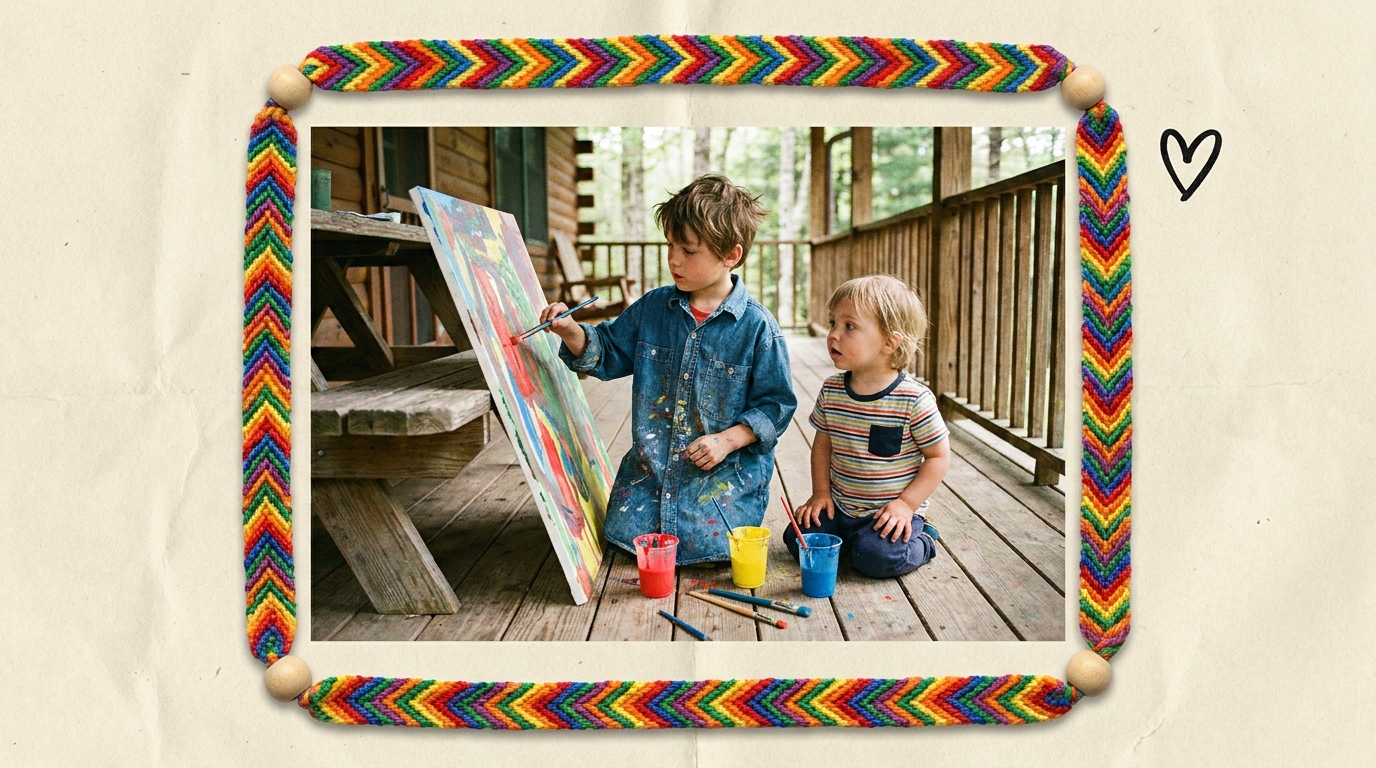
Arts is the category where Durham punches above its size. Between the Durham Arts Council’s downtown campus, the Hayti Heritage Center on Fayetteville Street, Liberty Arts’ working foundry on Foster, the visual-arts thread inside the Durham Public Schools’ summer enrichment slate, and a half-dozen private studios scattered through Trinity Park and Old North Durham, the inventory is denser than most southern metros and broader than the visual-arts cliche.
For 2026, expect day rates of $200 to $625 per week depending on whether the program is mixed-media, single-discipline studio, or specialty intensive. Materials fees occasionally land separately at $25 to $75. Five programs and the questions that separate the studio weeks worth their materials fees from the ones that aren’t, below.
What the arts camp scene actually looks like in Durham
The arts inventory in Durham doesn’t fit one shape. There’s the mixed-media broad-base lane — Durham Arts Council, the Y’s Creative Track, parks-and-rec art weeks at Holton — which puts kids through a rotation of drawing, painting, collage, and sometimes ceramics over the course of a week. There’s the single-discipline studio lane, where a kid spends the whole week on one craft with a working artist: printmaking, oil painting, watercolor, ceramics, or, at Liberty Arts for teens, bronze casting. There’s the culturally-rooted lane anchored at Hayti Heritage Center, where the curriculum is built around African American artistic traditions and the staff are usually working artists in those traditions themselves. And there’s the performing-arts-adjacent lane that overlaps with theater and music weeks at the Carolina Theatre and Pinhook venue-adjacent programs.
The Bull City murals, the Liberty Arts foundry on Foster Street, and the working studios scattered through the warehouses east of downtown create a saturation that lets Durham arts camps run unusually rich field-trip components. A typical Durham Arts Council week includes at least two walking field trips to working studios. That’s not standard nationally.
How much arts camps cost in Durham in 2026
Across 45 Durham arts programs the catalog tracks, weekly day-camp tuition for summer 2026 lands roughly:
- Parks-and-rec art weeks — $185 to $245 per week. Holton Recreation Center and the satellite branch programs. Mixed-media, age-grouped, materials included. Cheapest entry point.
- YMCA of the Triangle creative track — $235 to $295 per week. Solid mixed-media curriculum at three branches. Strong sliding-scale aid.
- Durham Arts Council Creative Arts Camp — $295 to $395 per week. The flagship arts program in the city. Ages 5 to 14, mixed-media, with discipline tracks for older kids.
- Hayti Heritage Center youth programs — $250 to $350 per week. Smaller cohorts than DAC; African American arts focus; named scholarships available.
- Specialty studio camps — $400 to $625 per week. Liberty Arts foundry teens, Pleiades printmaking, Cedar Creek Gallery ceramics intensives. Materials fees occasionally additional.
Half-day art weeks for kids under 7 run roughly 55 to 65 percent of full-day pricing.
Ages and formats that fit best
Arts camps work across a wider age band than most categories — but the format that fits an early-elementary kid is wildly different from what fits a teen:
- Ages 5-7: Half-day, play-based, mixed-media. The Durham Arts Council’s Mini Makers track and the Y’s early-childhood creative weeks are calibrated for this age.
- Ages 7-9: Full-day mixed-media with a structured daily rotation. This is where Durham’s broadest inventory lives. Kids can finish a real piece by Friday.
- Ages 10-12: Discipline starts to matter. Single-week studio focuses (printmaking, ceramics, oil painting) land well; the kid’s attention can sustain a 2-hour studio block.
- Ages 13-15: Specialty intensives. Teen ceramics at Pleiades, dark-room photography weeks, Hayti Heritage’s narrative-arts intensives. Portfolio development becomes meaningful.
- Ages 16-18: Foundry work at Liberty Arts (one of a handful of programs nationally that puts teens in front of a working bronze pour), advanced studio mentorships, college-prep portfolio reviews.
Five arts programs worth a closer look
- Durham Arts Council Creative Arts Camp — The flagship arts day camp in the city, running out of the DAC building on Morris Street. Ages 5 to 14, weekly sessions June through August. The instructor stable rotates each week; the building hosts visiting working artists. Member priority registration in early January is the key to landing specific weeks.
- Hayti Heritage Center summer programs — Anchored at the historic Saint Joseph’s AME building on Fayetteville Street. Smaller cohorts than DAC, deeper cultural specificity. The dance and visual-narrative weeks are the standouts; the named scholarships are an actively-promoted part of the program.
- Liberty Arts teen foundry intensive — On Foster Street, in a working sculpture foundry. One-week intensives where kids age 14 to 18 actually do bronze casting, lost-wax process, and finished sculpture. Cap of 8 per week; fills within a week of opening. Portfolio-grade.
- Pleiades Arts ceramics weeks — Trinity Park-adjacent studio. Wheel-throwing intensives for ages 9 and up. Smaller scope, deeper craft focus. Kids leave with two to four finished pieces, fired and glazed.
- Carolina Theatre Summer Arts — Combines arts with film and performance. Ages 8 to 14. The American Tobacco District proximity is the field-trip differentiator; programs frequently use the Carolina’s screening spaces and downtown public art for contextual learning.
Questions to ask before you register
A camp’s website probably leads with photos of finished projects. Those tell you the upside. The questions that surface the actual week experience are different:
- Is the camp instructor an experienced K-12 art teacher, a working artist, or a college student doing summer work? Each is fine; each produces a different week.
- What’s the materials list, and is it covered in tuition or invoiced separately?
- For ceramics or printmaking: when does the kid actually finish their pieces? Pieces that need firing or pressing usually arrive home a week later. Programs that don’t tell you that are setting up Monday-of-next-week disappointment.
- What’s the daily structure? A morning studio block, a midday rest/lunch, an afternoon studio block, plus a closing share is the strong shape. Programs that fragment the day into 30-minute rotations often produce shallower work.
- Is there a portfolio component or final exhibit at week’s end? For older kids, a Friday family exhibit is the moment that converts the week from “did some art” to “is an artist.”
- Studio-specific: How does the camp handle a kid who finishes their planned project Wednesday? The strong answer is “we have advancement projects ready”; the weak one is “we’ll find them something.”
If you’re cross-shopping arts against performing arts, the Durham arts directory and the broader Durham summer camps guide help filter — performing-arts camps live in a separate facet but share the Carolina Theatre and Hayti Heritage venues.
Written against the live Summer Camp Planner US + Canada catalog of 19,500+ camps. Pricing references draw from pricing_stats refreshed nightly. Editorial review by Justin Leader.