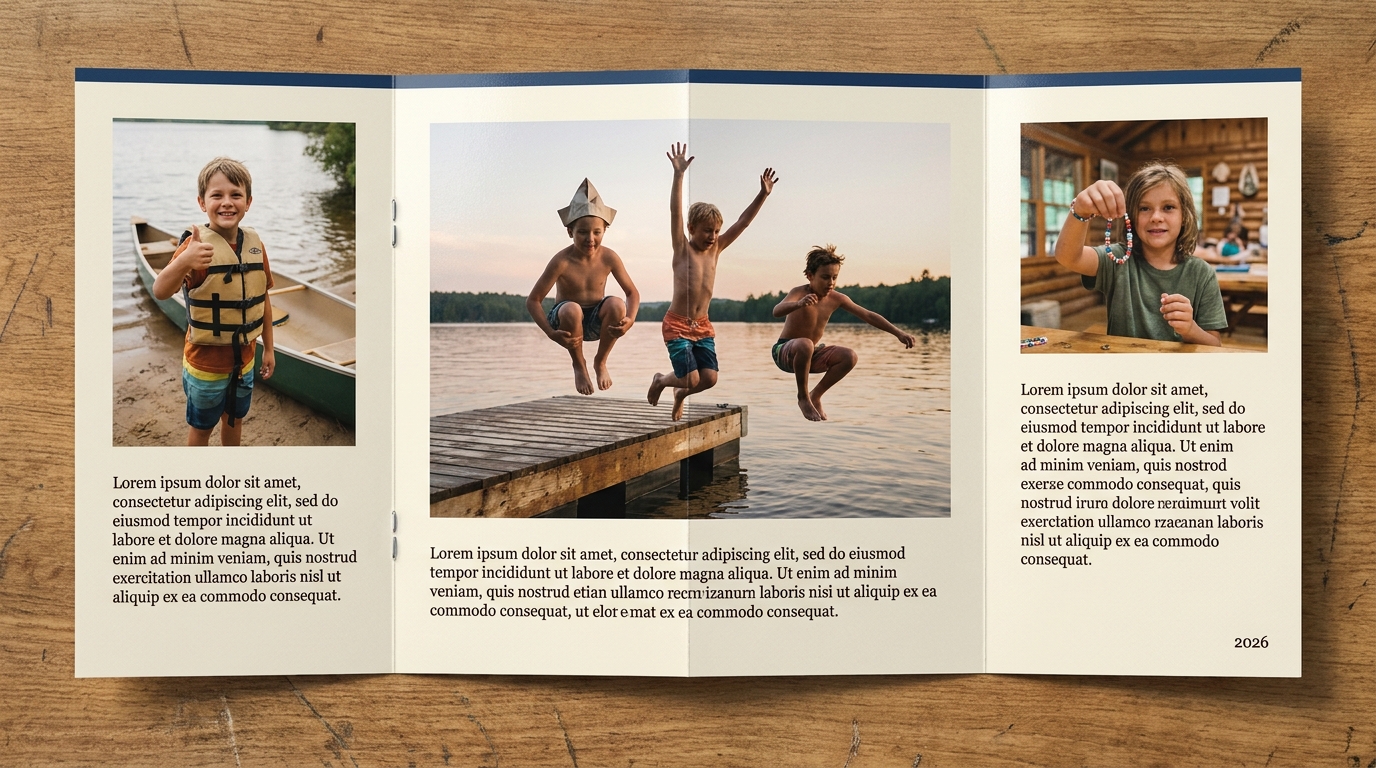
Roughly 35 overnight camps serve Chicago families in summer 2026, virtually all of them physically located in Wisconsin, Michigan, Indiana, or downstate Illinois with charter-bus pickup from city neighborhoods. Weekly rates run $1,400 to $2,200 — three to four times the typical Chicago day-camp rate. The window for a first overnight session is generally ages 8 to 11, in a 5- to 7-night rookie format. Apply early; core July weeks fill by January.
Why “Chicago overnight camp” really means southern Wisconsin
There is no significant overnight camp infrastructure inside Chicago city limits, and there hasn’t been since the lakefront-summer-camp era of the 1950s. Land cost and zoning ended that. What’s available today is a mature ring of overnight camps within a 90-minute to 4-hour drive — concentrated heavily in the Lake Geneva area of Wisconsin, the Wisconsin Dells region, the Michigan side of Lake Michigan, and a smaller cluster in northwest Indiana and southern Illinois.
The good news: this distance is exactly what makes overnight camp work. A 2-hour buffer between home and camp is enough to let the homesickness reflex pass without parents being tempted to pick up early. Charter buses do the family driving — most camps run organized buses out of one or two Chicago-area pickup points, eliminating the dread of changeover-day logistics.
Geographically, the densest cluster of high-quality Chicago-feeder camps sits in the southern Wisconsin lakes region (Williams Bay, Lake Geneva, Walworth, Burlington), about 90 minutes north of Lincoln Park or West Loop on a non-traffic day. The next ring north — the Wisconsin Dells, Eagle River, and Northwoods — adds another 90 minutes but offers larger waterfront properties and more wilderness programming.
What overnight camp actually costs in 2026
Overnight is the most expensive segment of the summer camp market, full stop. Across the 35 Chicago-feeder camps in our catalog as of April 2026:
- Median weekly rate: $1,750
- Lower quartile (budget overnight, often religious or YMCA): $1,150 per week
- Upper quartile (premium private camps with horseback, sailing, full waterfront): $2,300 per week
- Highest tier (specialty performing-arts and trip-camps): $2,800+ per week
A typical 2-week core session lands at $3,000 to $4,400, plus a charter-bus fee, plus a canteen account ($75 to $200), plus uniform or required gear. Budget $4,000 all-in for a 2-week stay at a mid-range camp.
For comparison, a Chicago day camp at the metro median of $415 per week works out to $830 for the same two weeks — about a quarter of the overnight cost. The premium is buying 24/7 supervision, full meal service, lakefront infrastructure, and the developmental experience itself.
Reading-the-fit checklist for first-timers
Five questions to work through with your kid before registering, ideally over multiple conversations across a couple of weeks:
- Has your child slept comfortably at a friend’s house or grandparents’ house overnight, multiple times, in the last year?
- Can your child manage their own basic hygiene (shower, brush teeth, change clothes) without a parent in the room?
- Has your child specifically asked about overnight camp — or is the idea coming from you?
- Will your child know at least one other camper, or are they comfortable making friends from scratch?
- Are you (the parent) prepared to not pull your child early if they get homesick in the first 48 hours? (Most camps strongly discourage early pickup, and the homesickness almost always passes.)
If three or more of these are firmly “yes,” your child is probably ready. If two or fewer, consider another year of day camp and revisit in 2027. There’s no shame in waiting — kids who go before they’re ready often refuse to return, while kids who go when ready typically beg to stay longer.
Five Chicago-feeder overnight camps worth a closer look
These are established programs with strong Chicago enrollment, ACA accreditation, and a public pricing and dates page.
- Camps in the Williams Bay / Lake Geneva, WI corridor — coed and single-gender options, 90-minute drive, traditional Wisconsin camp programming.
- YMCA Camp MacLean (Burlington, WI) — strong financial aid pipeline, 105-minute drive, traditional sleepaway format with horseback and watercraft.
- Camp Chi (Lake Delton, WI) — Jewish-affiliated coed camp, 3-hour drive, robust performing arts and waterfront.
- Camps in the Eagle River / Northwoods, WI region — longer drive (4 hours), wilderness-leaning, often with single-gender traditions.
- Camps in the southwestern Michigan dunes region — 90 minutes via Skyway, smaller capacity, lake and beach programming.
Browse the full list with neighborhood pickup points and session length filters at /directory/us/il/chicago.
Pre-registration questions that surface red flags
Beyond ACA accreditation and staff ratio, ask these three before sending a deposit:
- What’s your camper retention rate — what percentage of campers return the next summer?
- What’s your protocol if a child is severely homesick at the 48-hour mark?
- How do you handle medication management, food allergies, and bedtime routines?
Retention rate is the most useful single metric. Camps with 70 percent or higher year-over-year retention have figured something out. Camps that won’t share the number, or whose number is below 50 percent, are worth a closer look at parent reviews. Cross-reference against our broader Chicago summer camps guide for context on registration timelines and aid options.
How we built this list
The numbers above come from filtering the Summer Camp Planner US + Canada catalog (19,500+ camps as of April 2026) on overnight format and Chicago-area pickup or feeder-market designation. Pricing distributions are computed nightly in our pricing_stats table, scoped to overnight camps with Illinois feeder markets, and refreshed each evening. Editorial review for accuracy and tone by Justin Leader. We re-verify camp accreditation status, session dates, and pickup logistics each January.