Brooklyn has one of the densest concentrations of working artists in North America, and the borough’s summer arts camp lineup reflects that. Pratt’s institutional weight, a deep nonprofit studio layer, and a dispersed network of working-artist-led programs across Williamsburg, Bushwick, Gowanus, and DUMBO give families more visual-arts choice here than almost anywhere else in the US.
A working artist’s borough — and what that means for camp
Brooklyn’s arts camp scene leans heavily on the borough’s resident artist population. Pratt Institute anchors the high end with its summer pre-college program and youth weeks across Clinton Hill. Nonprofit anchors like BRIC, the Old Stone House, and Brooklyn Public Library partners run community-studio programs across Park Slope, Crown Heights, and Bed-Stuy. Working-artist-led studios in Bushwick, Gowanus, and Williamsburg run small-cohort weeks taught by practicing painters, ceramicists, and illustrators. And NYC Parks and rec-center arts weeks operate borough-wide as the affordability baseline.
Geography pulls hard. Park Slope, Cobble Hill, and Brooklyn Heights concentrate the priciest private-school-hosted arts weeks. Williamsburg and Bushwick lean toward working-artist studios in painting, illustration, and printmaking. DUMBO has a strong design and digital-arts cluster. Crown Heights, Bed-Stuy, and East Flatbush have the deepest community-arts nonprofits, often with the strongest aid programs in the borough.
Start with the Brooklyn arts directory and filter by sub-type (visual, ceramics, digital, design) before comparing.
What 2026 arts pricing looks like across the borough
Brooklyn arts pricing runs above national baseline at the private and pre-college end and well below it in the community and library tiers. Full-day visual-art weeks for ages 6 to 11 typically land at $475 to $750. Ceramics intensives and longer painting and drawing weeks cluster at $525 to $825. Pre-college portfolio and pre-conservatory weeks at Pratt and similar can clear $1,200 per week, with multi-week residentials running materially higher.
The US 2026 median of $402 per week puts most full-day Brooklyn arts at 20 to 90 percent above baseline. The genuinely affordable layer lives in BRIC community programs, library-led arts weeks, NYC Parks rec-center arts, and a handful of nonprofit studios that run $150 to $400. Quality at this tier is often genuinely strong — Brooklyn nonprofit teaching artists are typically working professionals.
Age fits across the visual-art spectrum
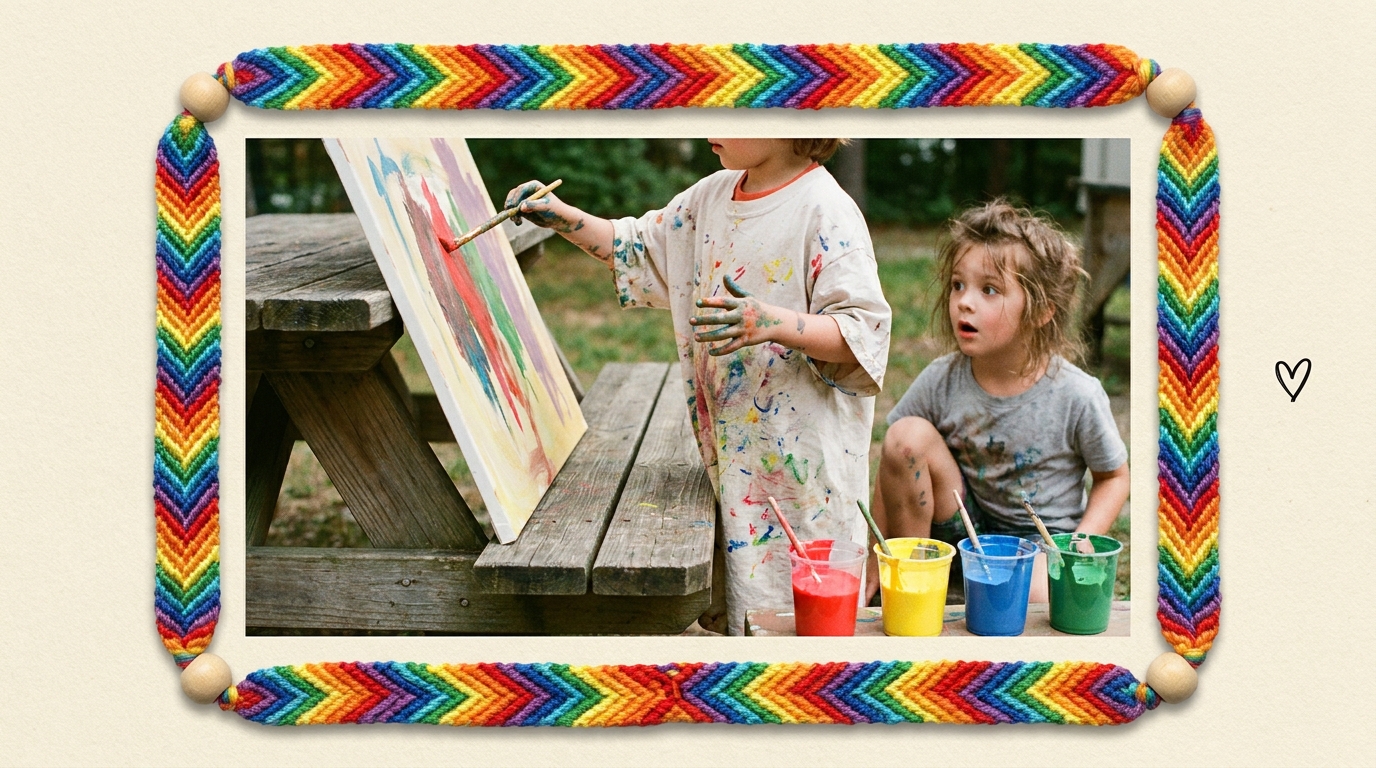
Ages 5 to 7 do best in open-studio formats with mixed media, low pressure, and strong staff ratios. Avoid output-driven formats (a finished piece by Friday) at this age. Pricing runs $200 to $575.
Ages 8 to 12 are Brooklyn’s arts sweet spot. Ceramics, longer painting and drawing programs, comics and zine workshops, intro digital art, and printmaking all land at a real level. This age band also has the best-aged teaching at most nonprofit and museum programs. Pricing runs $475 to $750.
Ages 13+ access Brooklyn’s most distinctive arts formats: Pratt pre-college portfolio, fashion-design weeks, photography intensives, animation and motion-graphics, architecture and urban-design programs, and serious illustration weeks. Faculty quality matters here far more than facility branding. Pricing runs $625 to $1,100, with multi-week pre-college residentials reaching higher.
Five arts formats Brooklyn does particularly well
Filters worth applying inside the Brooklyn directory rather than chasing a single brand:
Working-artist-led studio weeks in Bushwick and Gowanus. Often the strongest teaching for the price. Verify the lead artist is actually teaching, not just lending a name.
Ceramics intensives. A Brooklyn specialty. Look for kiln access, real wheel time, and a glazed final piece — not a paint-your-own-pottery format.
BRIC and library-led community arts weeks. Quietly excellent teaching at the most accessible price.
Pratt pre-college and youth programs. Strong faculty and credentialed pedagogy. Verify which weeks are taught by faculty versus graduate-student instructors.
Digital and design intensives in DUMBO. Animation, motion graphics, illustration, and design. Output-focused programs (a built portfolio piece) outperform lecture-heavy curricula.
Questions to clarify before signing up for a Brooklyn arts week
Before registering, ask:
- Is this a training-focused or recreation-focused program? Both are valid; the mismatch is what hurts.
- Who is actually teaching — a working artist, a credentialed K-12 art teacher, a graduate student, or an undergraduate counselor?
- What does a kid leave with: a finished piece, a portfolio addition, a showcase, or mostly experience?
- What supplies are included, and what is the all-in cost beyond tuition?
- Is financial aid still open, and what is the deadline? The Brooklyn financial-aid filter is the fastest first cut.
Brooklyn arts camps reward fit far more than brand. The strongest ceramics studio in Gowanus is wasted on a kid who wants to draw, and the priciest pre-college portfolio program is wasted on a kid who isn’t already self-identified as serious. Match by sub-type, format, and stated outcome — and the borough’s arts depth becomes a real advantage.
What Brooklyn arts parents say after the fact
Feedback from Brooklyn arts-camp families clusters around a few clear patterns. Working-artist-led studio weeks consistently produce the most memorable creative growth per dollar, especially for kids 8 to 12. Pratt and similar pre-college weeks deliver real portfolio progress when the teen is self-identified as serious; they produce regret when the enrollment was parent-driven.
Logistics matter. Many Brooklyn arts programs end at 3 p.m. without aftercare, leaving working parents stretched. Supplies — sketchbooks, specific pencils, sculpting tools, digital devices — can add 10 to 20 percent on top of tuition before the first day. Some programs require kids to walk to a different building for lunch or specific sessions, which younger kids find disorienting. Verify the all-in plan before committing.
Finally, fatigue. Full-day arts weeks drain kids in a way that is easy to underestimate. Two or three consecutive arts weeks is fine for most kids over 9; four or more, even of strong programs, shows visible burnout. Mixing in a sports, outdoor, or social week between arts blocks consistently produces a stronger summer.