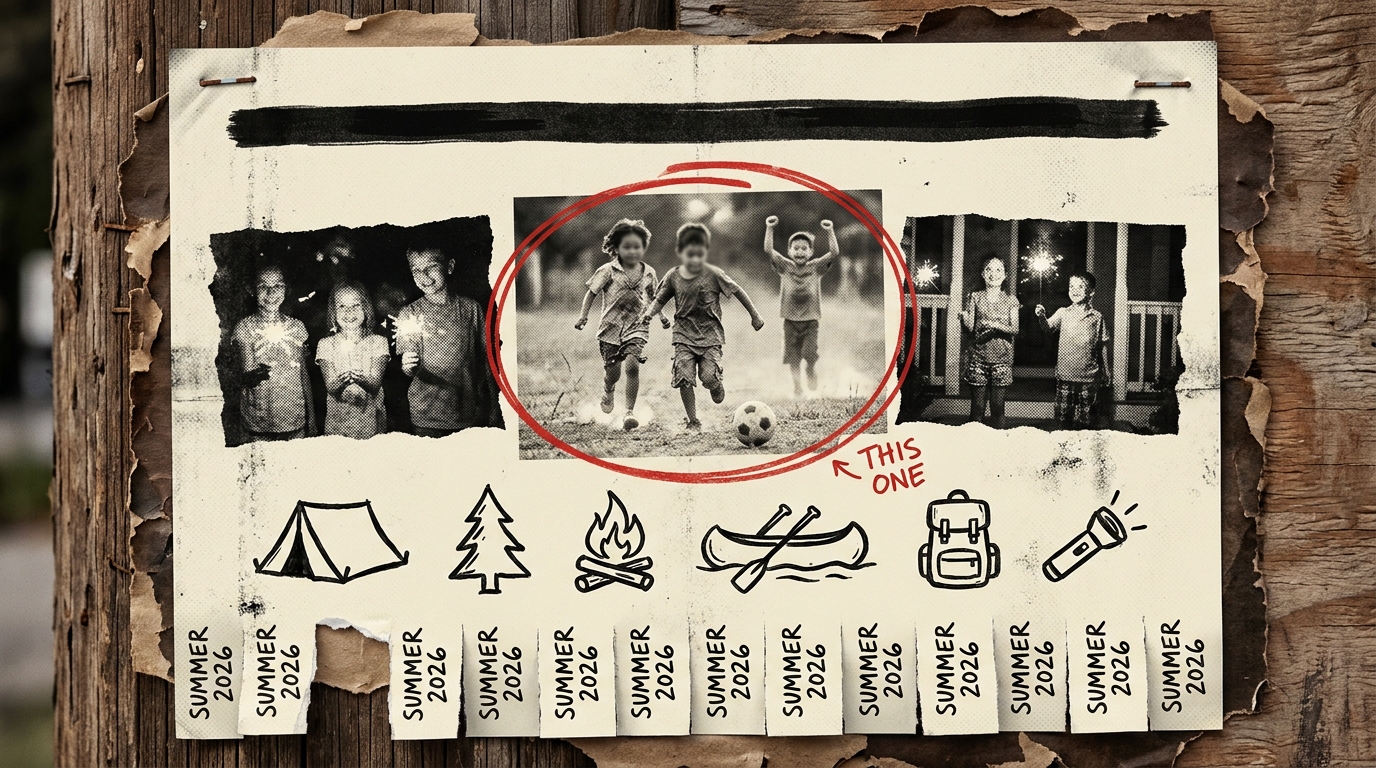
The 10-to-12 band is the trickiest age to camp well. Tweens are too old for the themed-week format that works at 7 and too young for the pre-college and counselor-in-training programs that fit teens. The right Bronx camp for this age is usually a specialty program with a real depth of content, a stable cohort, and an honest 10-to-12 grouping rather than the mixed 6-to-12 rooms that pad enrollment numbers. Here is what to look for in 2026.
What “good” looks like at this age
A camp that works for a 10-to-12 year old does three things consistently. It groups them with other tweens, not with younger kids. It offers content with real progression — a kid who comes back the second week is doing something more advanced, not the same starter activity. And it gives the cohort enough autonomy that tweens feel like camp belongs to them rather than to a counselor running a script.
The opposite pattern — mixed 6-to-12 grouping, repeated themed weeks, heavy counselor scripting — produces the disengagement most parents see in this age band. A kid who loved a camp at 8 will often start refusing the same camp at 11. That is usually a sign the program never built a real tween track, not a sign the kid changed. The Bronx age-10-12 directory filters for camps that actually serve this age band rather than nominally accepting them.
The Bronx pricing picture for tweens
Tween camp pricing in The Bronx tracks the borough’s broader pattern with some specialty premiums. Free public programming (DOE Summer Rising, parks-department) covers most borough families at zero or near-zero cost; quality at this age band varies more than for younger kids because Summer Rising is designed broadly. YMCA and community-camp tween tracks run $375 to $575 per week, around the US 2026 median of $402. Specialty programs targeted explicitly at tweens — sailing on the Sound, ropes and adventure at Pelham, STEM intensives, performing arts — run $550 to $900 per week. Selective academic and pre-college-feeder programs at Fordham or Manhattan College can reach $1,500 per week.
The honest math is that tween-specific quality usually costs more than general-age camp pricing, because real cohort grouping and real instruction depth are expensive to staff. Stacking a free morning with a paid afternoon specialty is the most common high-leverage Bronx pattern. Our 2026 pricing guide covers the wider context.
Camp formats that fit tweens
A few formats reliably hold this age:
Specialty STEM programs. Bronx STEM camps tend to maintain real cohort grouping at this age, particularly the robotics and coding tracks.
Sailing and on-water programs. Real skill progression and small cohorts. Tweens stick.
Performing-arts mini-productions. A 2-week show arc gives tweens a deliverable, which is the missing ingredient in most general camps.
Sports academies in a single sport. Tennis, soccer, basketball, swim. Single-sport depth holds attention.
Adventure and ropes-course programs. When staffed by trained facilitators, these are the strongest tween fit in the borough.
What does not fit: general themed-week camps for 6-to-12-year-olds where tweens get pulled into princess weeks, dinosaur weeks, or whatever the rotation is. Tweens know they are being marketed at, and they check out.
Red flags to screen out
Before paying any deposit for a 10-to-12-year-old:
- The program nominally accepts ages 5 to 12 but does not name a tween-specific cohort or counselor.
- Marketing photos are mostly of younger kids. (Photos do not lie about who the camp actually serves.)
- The schedule lists “free swim” or “free play” as more than 90 minutes per day. At this age, that becomes phone-watching or wall-sitting.
- No deliverable, no progression, no project. Just rotation through activities.
- Staffing is mostly high schoolers without a tween-cohort lead. Tweens read counselor age accurately and adjust their respect accordingly.
Where to start in the borough
The fastest filter is the Bronx 10-to-12 directory cross-referenced with the full Bronx directory. Pull a shortlist of 6 to 8 camps that explicitly describe a tween track. Then call or email to confirm that the tween cohort is actually running at the weeks you want; it is the single most common camp-website-versus-reality gap.
For families looking for a structured starting framework on the broader question of how to pick well, our how-to-choose-summer-camp guide walks through it.
What parents tell us after the season
A few patterns repeat in Bronx parent feedback for this age band. Specialty programs (sailing, STEM, single-sport, performing arts) over-deliver for tweens when the cohort is intact. The cohort piece matters more than the activity piece; a strong group of 11-year-olds doing a mediocre activity beats a great activity in a thin or mismatched cohort. Friend stacking helps — if your kid can sign up with one or two friends, the camp lands better.
Schedule structure is the second recurring note. Tweens do better with shorter, sharper days than younger kids. Five-hour focused programs frequently outperform eight-hour “extended day” rotations at this age. If you need full work-day coverage, stack a focused morning specialty with a parks or Y aftercare block rather than buying a single 9-hour program.
Finally, the autonomy piece. The best Bronx tween camps in 2026 give kids genuine ownership over part of their day — a project they choose, a route they pick on a hike, a role in a production. Tweens reward camps that treat them as competent and disengage from camps that treat them as oversized younger kids. That distinction is the single most useful filter when you are reading any Bronx camp website with this age in mind.